
Inlays & Onlays
Larger than a filling, smaller than a crown — and the reason matters, because the tooth structure a crown removes does not come back.
When a tooth has lost too much structure for a filling to hold reliably, the reflex answer is a crown. A crown works, and it works by reducing the tooth on every surface to make room for full coverage. That is a substantial amount of healthy structure removed in order to protect the part that was damaged.
An inlay or an onlay does the same job over a smaller area. It is made outside the mouth to fit the cavity precisely, then bonded into place, restoring the shape and the strength of the tooth while leaving the sound walls intact. The difference between the two is only how much of the biting surface is covered: an inlay sits within the cusps, an onlay extends over one or more of them.
The choice between an onlay and a crown is one of the more consequential conservative decisions in dentistry, and it is usually made in thirty seconds without discussion. It deserves longer than that, because it is not reversible in the direction that matters. An inlay or an onlay does the same protective job without that: the piece is made outside the mouth to fit the cavity exactly and is bonded in, so the healthy walls stay where they are.
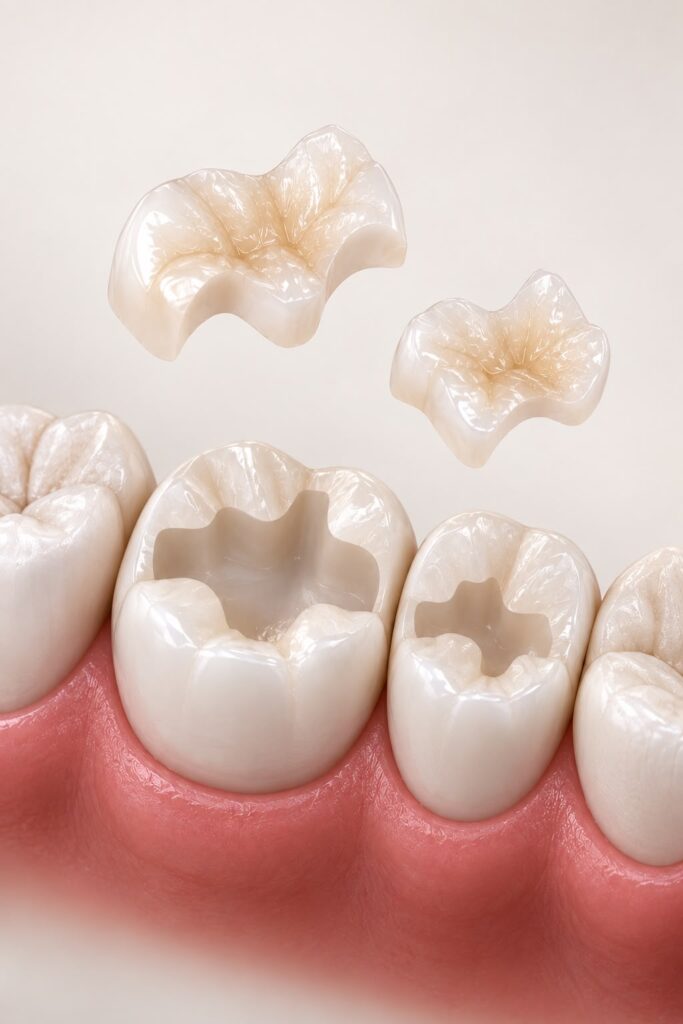
Restoring without over-preparing
What is left, measured
Which walls of the tooth are sound and which are undermined decides whether coverage is needed at all, and over how much of the surface.
Made to fit, not packed in
The restoration is produced outside the mouth against a precise record, which gives a better contact point and a better contour than material shaped inside a wet cavity.
Bonded, then checked in function
It is bonded to the remaining tooth so the two behave as one unit, and the bite is verified in movement before it is finished.
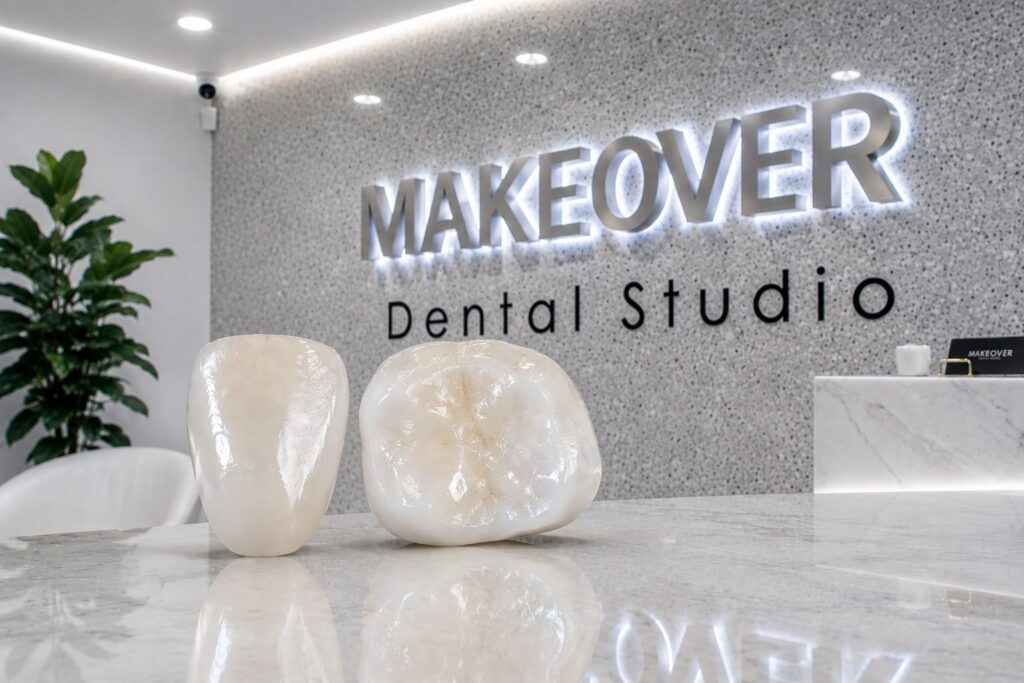
Why not just place a crown?
Because a crown costs you tooth structure that cannot be replaced, and structure is what a tooth’s long-term survival depends on. Full coverage means reducing every surface, including the walls that were perfectly sound. Where enough healthy structure remains to support a bonded restoration, an onlay achieves the same protection over a smaller area and leaves you with more tooth for whatever the next thirty years require. Where the walls are already undermined, a crown is the correct answer and that is what you will hear. That choice decides how much of your own tooth you keep, and it often gets made in seconds without being explained. It is worth the conversation — because a crown can still be done later, and the structure removed for one cannot be put back.
Inlay or onlay?
The difference is how much of the chewing surface the piece covers. An inlay sits within the cusps; an onlay extends over one or more of them, for wider damage. Which one applies is decided by what the tooth has left, not by preference.
Both are made in porcelain or zirconia, matched to the shade and texture of the teeth around them.
Are these as strong as a crown?
Within their indication, yes. A bonded ceramic onlay adheres to the remaining tooth so that the two function as a single unit, and load is shared rather than resting on a preparation. The strength question is really an indication question: an onlay in the wrong case is not a weak restoration, it is a misapplied one. That judgement is made on how much sound structure is left, not on preference.
What it costs
Prices in USD. Every plan is confirmed after imaging and clinical evaluation; the written estimate you receive before treatment is the one that applies.
Before & After
These cases are documented with the preparation photographed before the restoration is bonded, because that image shows the thing worth judging: how much of the original tooth survived the treatment.

What patients say
“From the moment I first reached out by email, my experience with Makeover Dental Studio has exceeded every expectation. The clinic itself is state-of-the-art, but what truly sets it apart is the incredible team behind it.”
“I went in there as a walk in and came out a happy customer. Great service and beautiful facility.”
“Very pleased and impressed with the professional service and attention given at this clinic. All of the staff is very attentive. Dr. Erika answered all my questions and concerns, she explained in detail the whole process of my braces…”
“Thank you so much for saving the day. I don’t remember the last time I had such a painful toothache. My wisdom teeth were definitely not helping. Thank you for taking me in last second…”
Quoted exactly as written. All 479 reviews on Google →
Frequently asked
What patients ask before they book. If yours is not here, the fastest answer is a call.
- Your case planned in 3D before treatment begins
- A treatment plan written in English
- A direct line to the clinic once you are home
Ceramic in most cases, chosen for its wear behavior and its appearance, and bonded rather than cemented. Composite versions exist and are chosen in specific circumstances, usually where the restoration is expected to be revised later.
Two clinical steps: preparing and recording the tooth, then bonding the finished restoration. How closely those can be scheduled depends on how the restoration is produced, and it is confirmed before you plan the trip.
Frequently, and it is a common reason for the treatment. A large amalgam that has been in place for years often leaves the tooth cracked around it, and an onlay both replaces the filling and holds the remaining cusps together.
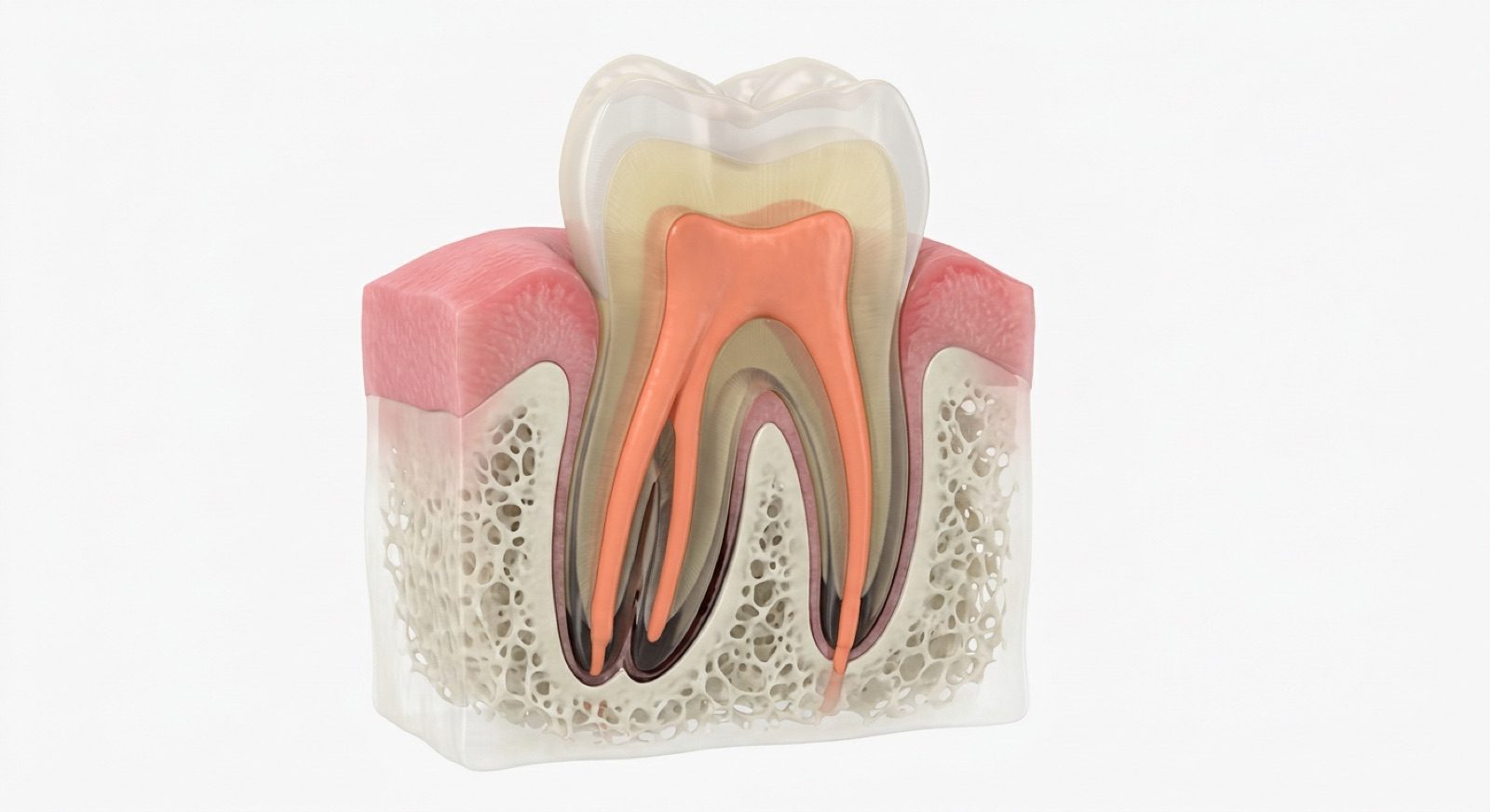
How much of your own tooth is left standing. A filling is shaped inside the mouth and works for small cavities. A crown covers the whole tooth, which means reducing every surface of it. An inlay or onlay is made outside the mouth to fit the cavity exactly and bonded in: it restores the strength and the shape without touching the healthy walls.
15 to 20 years or more, with ordinary hygiene and regular check-ups. Porcelain and zirconia do not shrink or wear the way a composite filling does over the years.
Normal diet the same day — the bond reaches its strength almost immediately. Keep ice, hard candy and bones off that side for the first 24 hours.



How many visits this takes is something you can know before you book the drive.
Preparation, laboratory time and fitting are what set the schedule, and yours is written out before you commit to it. Where a crown can be finished in a single visit, that is said plainly.
Mon-Fri 9:00am – 6:00pm
Sat 9:00am – 4:00pm
Request your consultation
If you have been told several teeth need crowns, it is worth asking how much sound structure each one still has. That single question changes the plan more often than patients expect.
US: +1 (619) 202-0423
MX: +52 (664) 634-2023
makeoverdentalstudio@outlook.com
Frida Kahlo 10410, Torre Quatro, 1st floor, office 106
Zona Urbana Rio, Tijuana, B.C. 22010
Mon-Fri 9:00am – 6:00pm | Sat 9:00am – 4:00pm