
Dental Crowns
Full-coverage restorations for teeth that are cracked, heavily filled, or treated with a root canal.
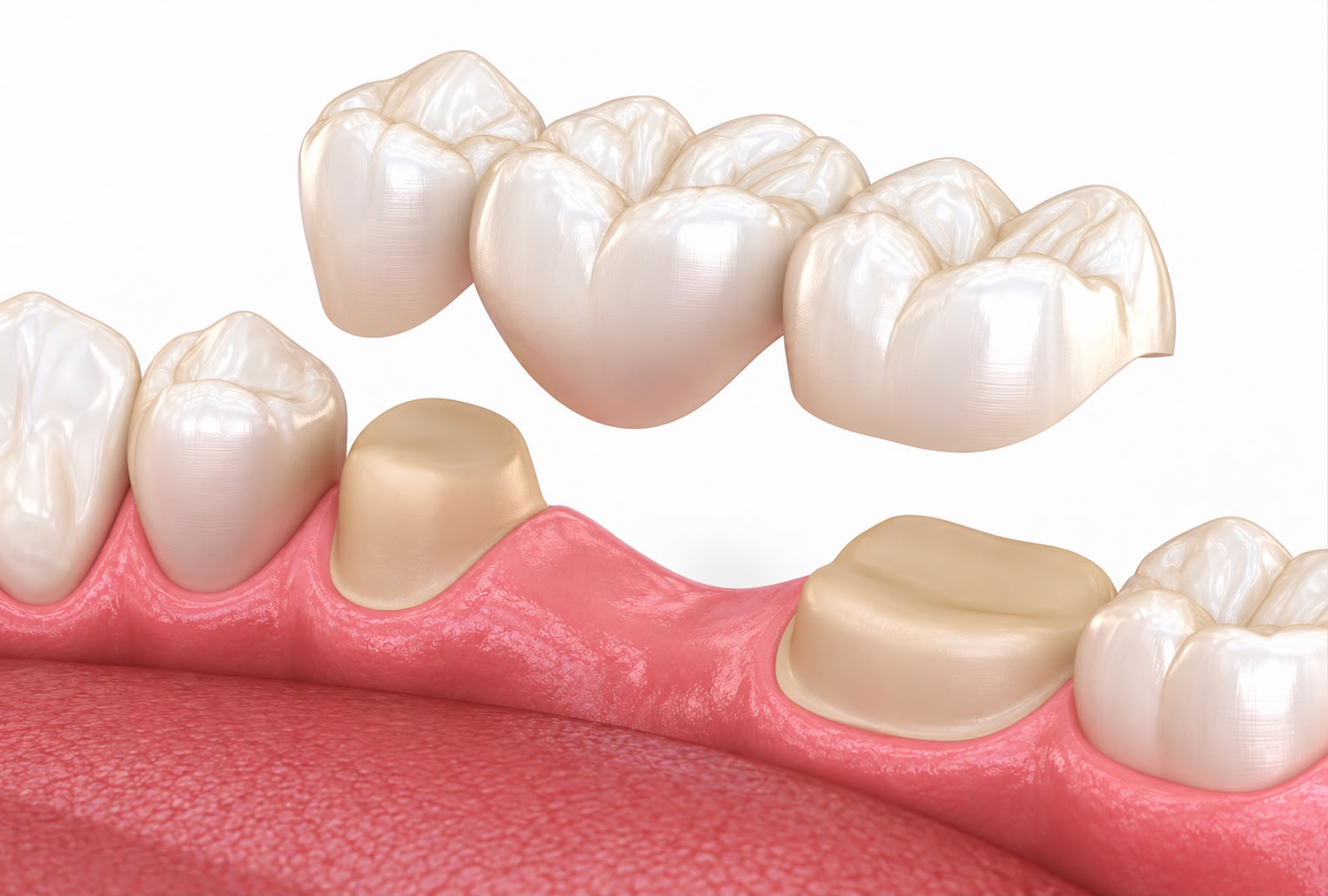
A crown covers the whole tooth. It is what a tooth needs when too much of it is gone — cracked, heavily filled, deeply decayed, or after root canal treatment — because what is left can no longer carry a bite on its own. The crown spreads the load across the whole tooth instead of concentrating it on the part that is already weak.
The material follows the job. Zirconia takes heavy load at the back of the mouth; lithium disilicate is chosen where appearance is doing more of the work. Neither is universally better, and a practice that only offers one is choosing for its laboratory rather than for your tooth.
Where less coverage would do the same job, that is the better answer. An onlay preserves tooth structure a crown removes, and structure removed does not come back.
The laboratory is in-house, with a digital workflow connected to two established laboratories in the region. That is why shade, shape and bite are matched to your face in the building rather than shipped in and adjusted afterwards.
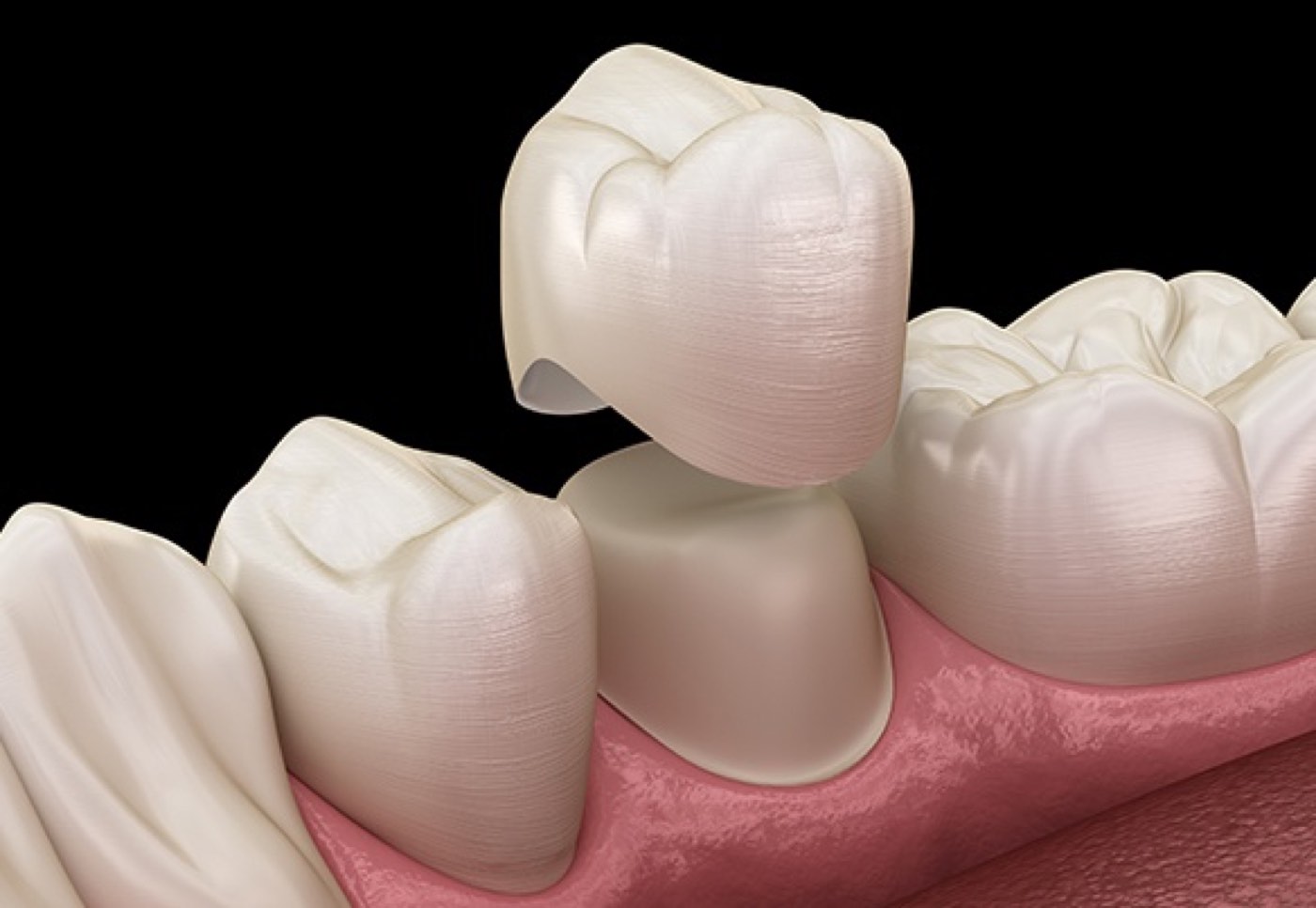
From a compromised tooth to a restored one
What is left, assessed
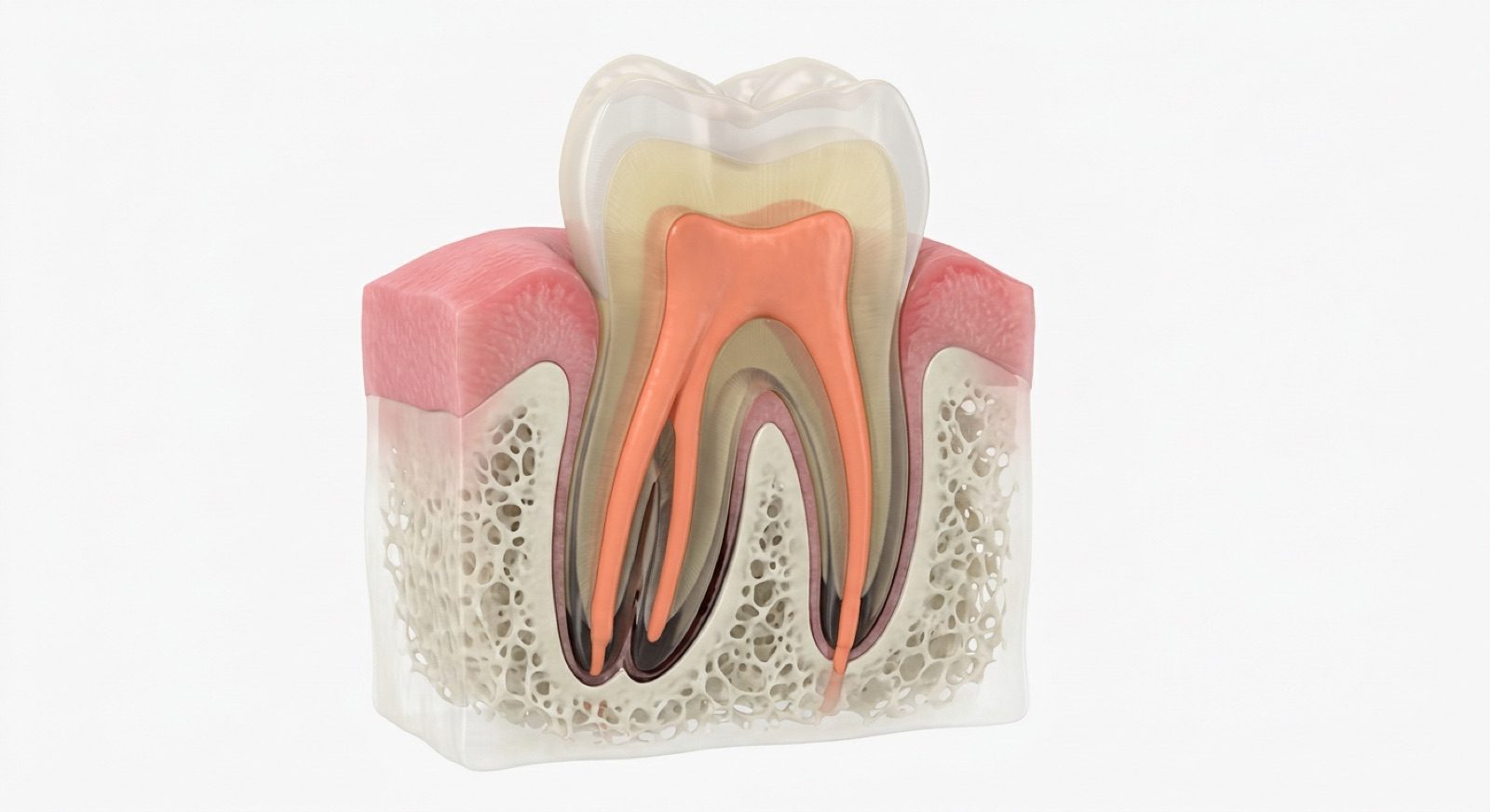
How much sound structure remains, and whether the tooth is periodontally and endodontically stable, decides whether a crown is the right restoration at all.
Preparation and record
The tooth is shaped and the shade recorded against the teeth beside it in natural light, not from a chart under a surgical lamp.
Fit, bite, finish
The crown is seated, the bite checked in function, and the contacts adjusted before it is cemented. A crown that sits high fails early.
How it is planned
- Intraoral digital scanning — a 3D replica of your teeth, with no impression trays.
- Radiographs and clinical evaluation — the structure under the surface.
- 3Shape and exocad — the scans come together in a single file, where the doctors and the laboratory technician work the case together.
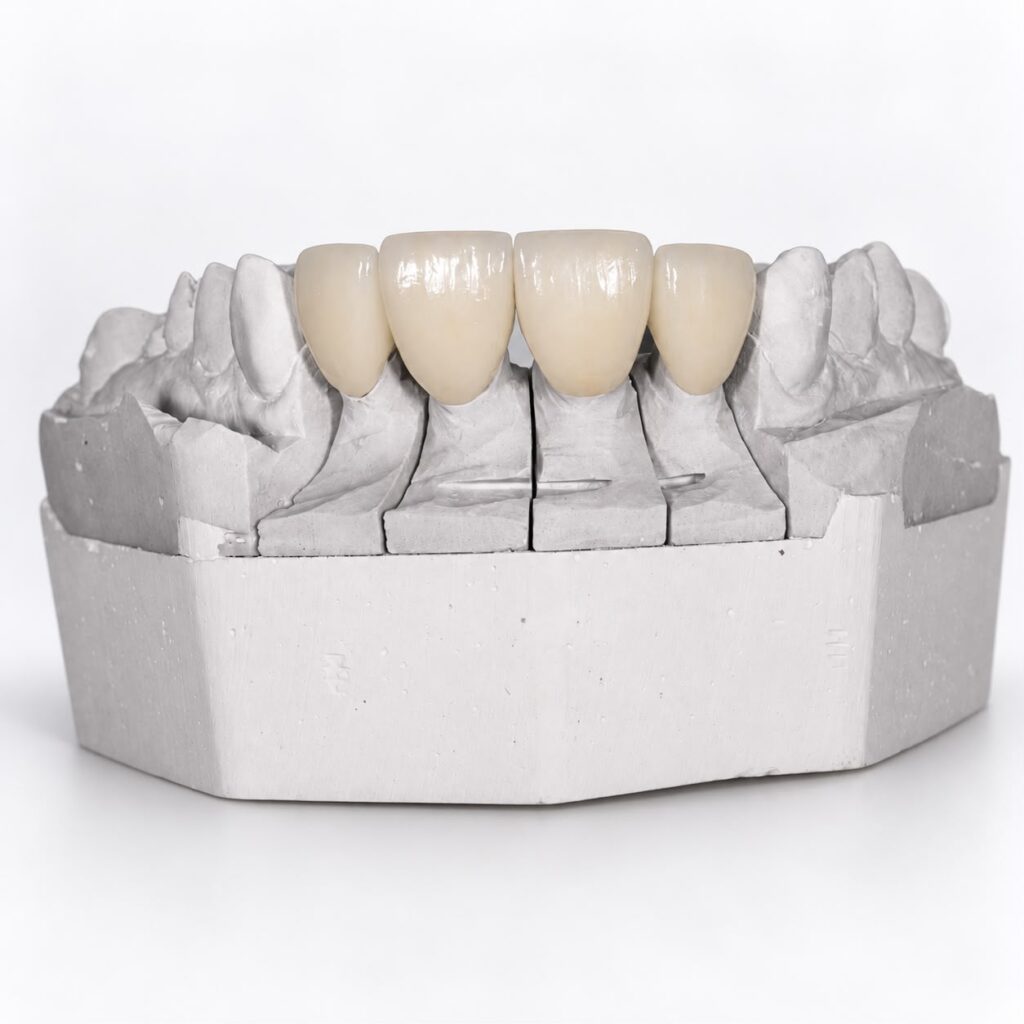
Zirconia or porcelain?
Zirconia for strength under posterior load, lithium disilicate where translucency matters more. The position of the tooth and your bite force decide it, and both are discussed before the tooth is prepared.
- Full zirconia — milled from a single block. The strongest of the three, and what goes at the back, where the load is heaviest.
- Zirconia with layered porcelain — a zirconia core for strength, with porcelain built over it by hand for depth.
- IPS e.max lithium disilicate — where the appearance is doing most of the work.
Whichever one the case calls for, the piece is finished by hand by the ceramist. That is where the translucency, the texture and the shade depth come from.
Overlays
An overlay covers the whole biting surface — over every cusp — and leaves the side walls of the tooth standing, preserving up to 50% more tooth structure than a crown does. Overlays has the detail: why the bond to enamel holds, where the margins sit, and how long they last.
The scale, in one line
Inlay — inside the cusps. Onlay — over one or more of them. Overlay — the whole biting surface, side walls intact. Crown — everything, down to the gum. Where the damage stops short of a crown, inlays and onlays are the step before this one.
Who prepares the tooth
A graduate of the Universidad Autónoma de Baja California (2017), Dr. Daniel Frías has been a key pillar of the Makeover team for 6 years. He specializes in high-end cosmetic enhancements, complex full-mouth reconstructions, and advanced rehabilitation cases, combining clinical excellence with advanced aesthetics to deliver comprehensive smile transformations. Cédula profesional 11502407.

Who else sees your case
A graduate of the Universidad Autónoma de Baja California (Class of 2015), Dra. Karla Stefany Hernández has been a vital asset to the Makeover Dental Studio clinical team for 7 years. She specializes in restorative and esthetic dentistry, focusing on fixed prosthodontics (crowns, bridges, inlays, and onlays, among others), composite veneers, advanced teeth whitening, and composite restorations. Her expertise also includes removable prosthetics (partial and full dentures) alongside comprehensive general dental care. Cédula profesional 13262947.

Who matches the shade
A proud graduate of the Universidad Autónoma de Baja California (2014), Dra. Karla P. Ramírez Nuñez has been an essential cornerstone of the Makeover team for over 12 years. She specializes in advanced cosmetic treatments, full-mouth reconstructions, and managing highly complex aesthetic cases, blending precision with artistry to restore both function and beauty. Cédula profesional 10404814.
Who plans the case when it goes further
Dr. Rafael Cortés Álvarez, Director of Makeover Dental Studio. He takes the case where a crown is not the whole answer — where the tooth needs crown lengthening first, or where the plan crosses into implants or full-mouth rehabilitation. Cédula profesional 5933630.
How the appointment goes
A computer-controlled anesthetic delivery is used instead of a conventional syringe: the flow is metered.
The tooth is prepared under magnification — the compromised structure comes out and no more than that, and the margin is shaped.
Before anything is cemented there is a try-in: appearance, speech and bite are checked with you and adjusted until it is right. Then the surfaces are treated and the crown is bonded, sealing the margin.
Do I need a crown after a root canal?
Usually, on back teeth. A treated molar has lost internal structure and is prone to fracture under load, and the crown is what protects the endodontic work you already paid for. Where the tooth still has its outer walls, that protection can come from an endocrown instead of a full crown.
Endocrowns
Where a treated molar still has its outer walls, the coverage it needs does not have to come from a full crown — and it does not need a post drilled into the root either. An endocrown is a single piece of ceramic that seats in the chamber the endodontics left behind: the alternative that avoids the post. That page covers when it fits, and why it is not offered more often.
What it costs
Prices in USD. Every plan is confirmed after imaging and clinical evaluation; the written estimate you receive before treatment is the one that applies.

What patients say
“From the moment I first reached out by email, my experience with Makeover Dental Studio has exceeded every expectation. The clinic itself is state-of-the-art, but what truly sets it apart is the incredible team behind it.”
“I went in there as a walk in and came out a happy customer. Great service and beautiful facility.”
“Very pleased and impressed with the professional service and attention given at this clinic. All of the staff is very attentive. Dr. Erika answered all my questions and concerns, she explained in detail the whole process of my braces…”
“Thank you so much for saving the day. I don’t remember the last time I had such a painful toothache. My wisdom teeth were definitely not helping. Thank you for taking me in last second…”
Quoted exactly as written. All 479 reviews on Google →
Frequently asked
What patients ask before they book. If yours is not here, the fastest answer is a call.
- Your case planned in 3D before treatment begins
- A treatment plan written in English
- A direct line to the clinic once you are home
Related reading: Veneers vs Crowns: They Are Not Competing Options
Long-term service is normal with good hygiene and a controlled bite. The usual reasons for replacement are decay at the margin or a change in the bite, rather than the crown itself wearing out. On average 15 to 20 years, and often longer. What decides it is less the ceramic than the bite it was built into, your hygiene, and whether you grind your teeth: if you do, a nightguard is part of the plan rather than an extra.
Preparation and fitting are the two clinical steps, and how close together they can be scheduled depends on how the crown is produced.
Sometimes. An inlay, an onlay or a bonded restoration preserves more of your own tooth, and where that is viable it is the more conservative choice.
The dark line people associate with crowns comes from a metal layer underneath showing at the gum over the years. Nothing used here has metal in it — zirconia and lithium disilicate — and every piece is finished by hand, so what is matched is the translucency and the anatomy of the teeth beside it, not only a shade.
You are not meant to pick one from a menu. The material is decided at the evaluation — from how hard you bite, where the tooth sits and what it has to match — and then the doctor tells you which one and why. You still have the last word. What you should not get is the choice handed to you without the reasoning behind it.
The anesthetic is delivered by a computer-controlled system rather than a conventional syringe, which takes out the pressure and the sting of the injection. Once the area is numb the preparation itself is not felt. Mild sensitivity to temperature for a few days after cementation is common and settles on its own.
Because a filling fills and a crown holds. Once decay or an old restoration takes more than about half the width of a tooth, what is left is a wall rather than a tooth: a composite plugs the gap but adds no strength, and the tooth can split vertically under an ordinary bite. A vertical split usually ends in extraction. A crown wraps the tooth and spreads the load instead of concentrating it on what is left.
Keep it, and do not try to glue it back yourself: household or over-the-counter adhesive contaminates the surfaces and can turn a simple re-cementation into a remake. Call the clinic. If the crown is intact and the tooth underneath is sound, the same crown is usually cleaned and re-cemented.
In about 95% of cases it is designed, tried in and bonded in a single visit. When the shade, the margin or the bite is not right — whether you notice it or the clinical team does — it goes back to the laboratory and the cementation moves to a short follow-up appointment. The appointment gets rescheduled rather than the detail overlooked.
A scale of coverage. An onlay replaces one or more damaged cusps. An overlay covers the whole biting surface, wrapping over every cusp, and leaves the healthy side walls intact. A crown covers everything down to the gum, which means reducing the enamel all around.
Normal diet the same day. Keep ice and anything you would not normally bite off that side.
Explore other treatments

How many visits this takes is something you can know before you book the drive.
Preparation, laboratory time and fitting are what set the schedule, and yours is written out before you commit to it. Where a crown can be finished in a single visit, that is said plainly.
Mon-Fri 9:00am – 6:00pm
Sat 9:00am – 4:00pm
Request your consultation
If you have been told a tooth needs a crown, the useful question is how much structure is left and whether something smaller would hold. That is what a consultation answers.
US: +1 (619) 202-0423
MX: +52 (664) 634-2023
makeoverdentalstudio@outlook.com
Frida Kahlo 10410, Torre Quatro, 1st floor, office 106
Zona Urbana Rio, Tijuana, B.C. 22010
Mon-Fri 9:00am – 6:00pm | Sat 9:00am – 4:00pm