Overlays
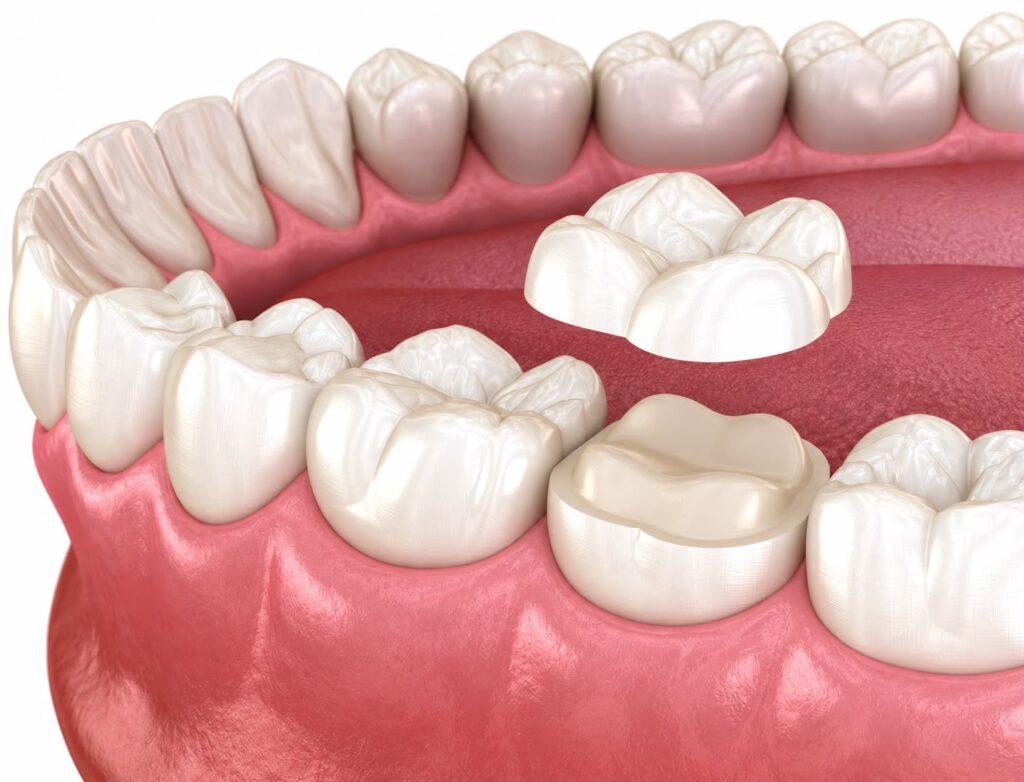
Full coverage of the biting surface, with the side walls of the tooth left standing.
A tooth with a badly worn or fractured biting surface used to mean a crown. An overlay covers that surface — all of it, over every cusp — and leaves the side walls of the tooth standing. It preserves up to 50% more tooth structure than a crown does.
The structure a crown removes does not come back. Where the side walls are still sound, there is no clinical reason to reduce them.
Coverage without a full crown
What is left, measured
Which walls of the tooth are sound and which are undermined decides whether an overlay is enough, or whether full coverage is genuinely needed.
Made to fit, not packed in
The restoration is produced outside the mouth against a precise record, which gives a better contact point and a better contour than material shaped inside a wet cavity.
Bonded, then checked in function
It is bonded to the remaining tooth so the two behave as one unit, and the bite is verified in movement before it is finished.
Why it holds
Bonded to enamel. Because the overlay sits higher on the tooth, it bonds to enamel rather than to cut dentine, and that bond is the stronger of the two: the piece and the tooth flex together.
Margins above the gum. A crown’s margin often ends below the gum line, where it irritates and where you cannot reach. An overlay’s margin stays above it — easier to brush and floss, and less inflammation over the years.
Porcelain or zirconia, matched to the walls that remain.
The scale, in one line
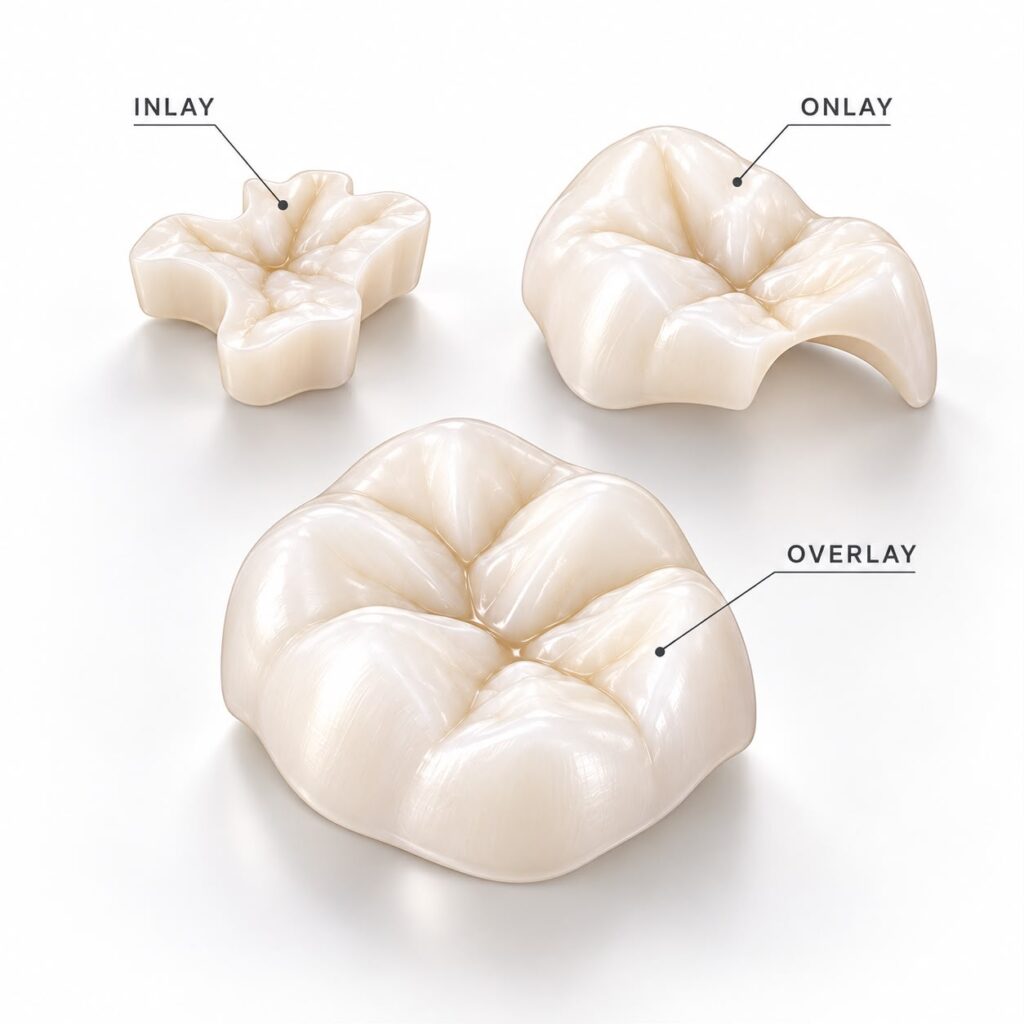
Inlay — inside the cusps. Onlay — over one or more of them. Overlay — the whole biting surface, side walls intact. Crown — everything, down to the gum. Where the damage stops short of a crown, inlays and onlays are the step before this one.
How long it lasts
15 to 20 years or more, with survival rates comparable to those of crowns, given ordinary hygiene and regular cleanings.
Where the damage goes further than an overlay can cover, a crown is the correct answer and that is what you will hear. And where the tooth has had a root canal and the walls are still standing, an endocrown covers the same surface in one piece.
Frequently asked
What patients ask before they book. If yours is not here, the fastest answer is a call.
- Your case planned in 3D before treatment begins
- A treatment plan written in English
- A direct line to the clinic once you are home
15 to 20 years or more, with survival rates comparable to those of crowns, given ordinary hygiene and regular cleanings.
No. What decides recurrent decay is the precision of the bond, not the type of restoration. An overlay is bonded to enamel under isolation, and its margins sit above the gum line — where you can actually reach them with a brush and floss, unlike the deep margins of a crown.

Normal diet the same day — the bond reaches its strength almost immediately. Keep ice, hard candy and bones off that side for the first 24 hours.
Whether your tooth needs an overlay or a crown is decided by what is left of it, not by what is quicker.
The walls are assessed before anything is prepared, and what applies to your tooth is written into the plan before you commit to it.
Mon-Fri 9:00am – 6:00pm
Sat 9:00am – 4:00pm
Request your consultation
If you have been told a worn or cracked tooth needs a crown, it is worth asking how much of the side wall is still sound. That single question changes the plan more often than patients expect.
US: +1 (619) 202-0423
MX: +52 (664) 634-2023
makeoverdentalstudio@outlook.com
Frida Kahlo 10410, Torre Quatro, 1st floor, office 106
Zona Urbana Rio, Tijuana, B.C. 22010
Mon-Fri 9:00am – 6:00pm | Sat 9:00am – 4:00pm