Bone Grafting
When there is not enough bone to hold an implant today, grafting is how the foundation is built first.
Bone recedes once it stops holding a tooth — quickly in the first months after extraction, then steadily. By the time many patients come in for an implant, the site no longer has the volume to hold one securely.
A graft adds that volume back. The material placed is a scaffold rather than the finished product: over months your own bone grows into it and largely replaces it, and the implant is eventually placed into bone you made.
Being told you need a graft can feel like an upsell, and the recommendation deserves to be checked. It should be visible on imaging, explained in terms of missing width or height at a specific site, and it should arrive with the alternative attached — because a change of implant angle or position sometimes removes the need entirely.
At Makeover Dental Studio, grafting is done with Geistlich Bio-Oss®, Zimmer Dental and Straumann biomaterials, and resorbable membranes — long-acting collagen and pericardium — that dissolve naturally on their own as the bone forms. These are chosen for documented biological predictability rather than for cost, because a graft that does not integrate is not a saving. Bone grafting carries an outstanding 85% to 95% success rate worldwide, and it is what makes it possible to ensure your investment in a dental implant lasts a lifetime.

Who performs the graft
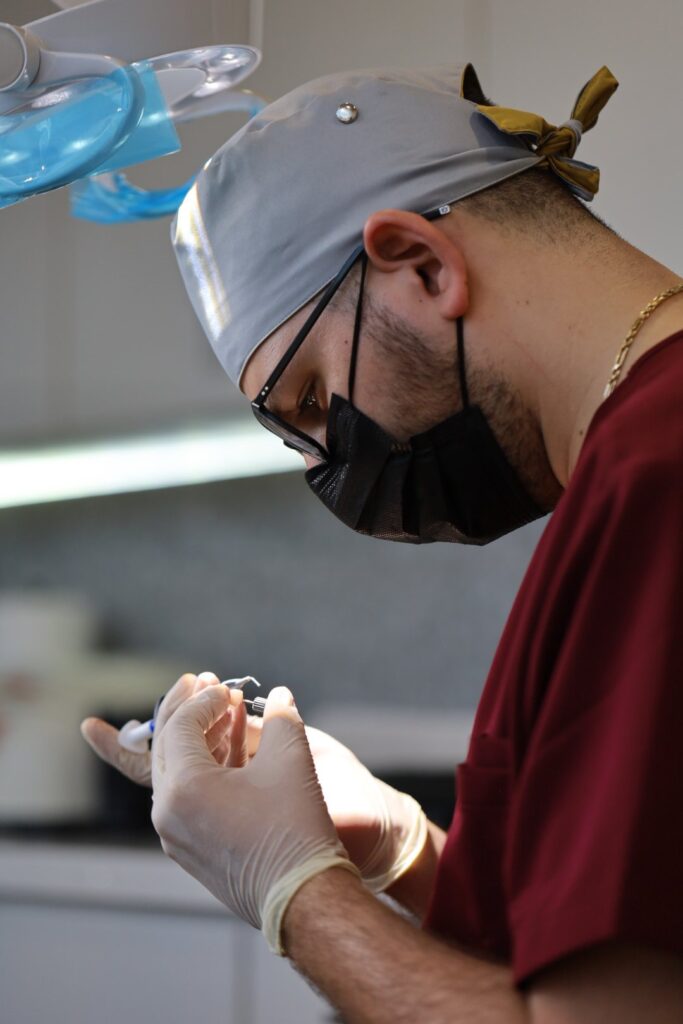
Dr. Rafael Cortés Álvarez, Director of Makeover Dental Studio, is a pioneer of guided implant surgery in Baja: in 2006 he placed the region’s first All-on-6 case using NobelGuide 3D technology, and he has worked with Nobel Biocare for the nineteen uninterrupted years since. He graduated from the Universidad Autónoma de Baja California and holds a diploma from Loma Linda University. His work carries the imprint of two lineages: the direct mentorship of Professor Dr. Alan Kleiman, a pioneer in modern implant research, and the advanced protocols of Dr. Sascha Jovanovic’s continuing-education system, which he keeps refining alongside faculty from the world’s leading implant programs. That is what mentorship passes down, case by case — and it is the method behind the plan presented to you. Cédula profesional 5933630.
Grafting is what makes an implant possible where bone is missing, and the biomaterials used here are chosen for documented biological predictability rather than for cost. Whether you need one is answered by the scan.

Expertise on every implant case
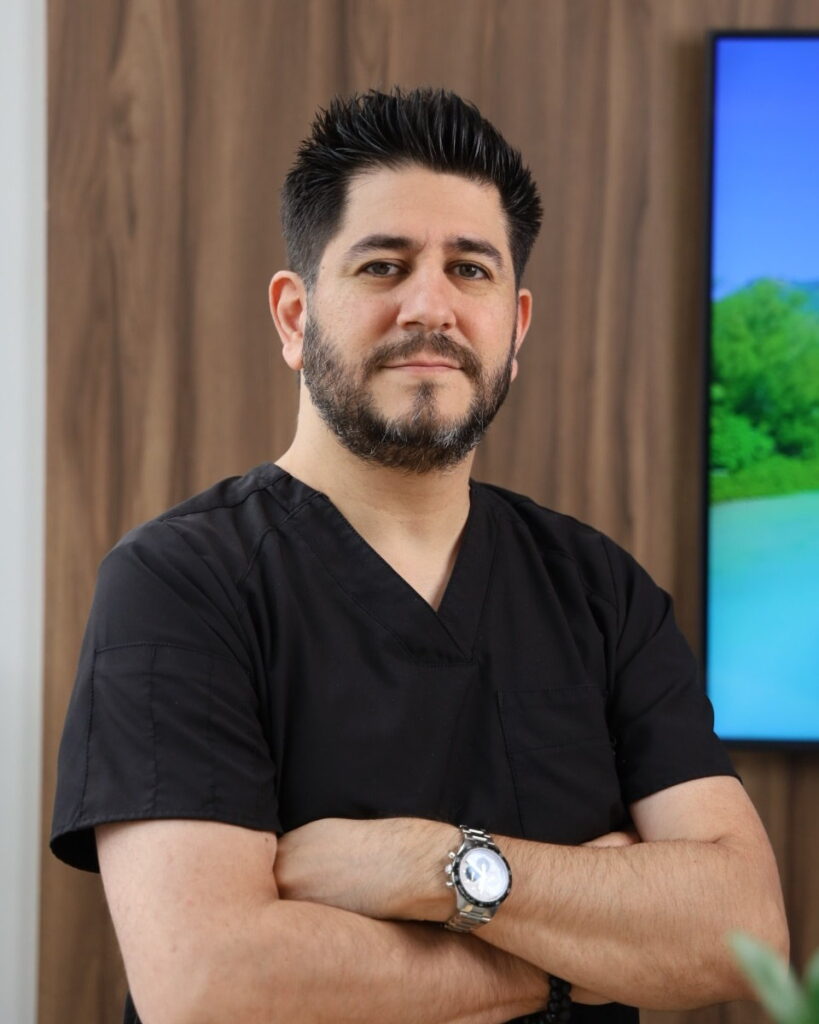
Dr. Jorge Maytorena is a leading surgeon on the dental team. He works closely with the DASS protocol (Digitally Assisted Soft tissue Sculpturing) — the digital workflow developed by Dr. Alessandro Pozzi and taught alongside Dr. Lorenzo Arcuri. This cutting-edge technique maps the bone and gum interface on screen before surgery, so the arch placed that same day is shaped to guide how the tissue heals; this allows a finished full-arch case to read as teeth, rather than as pink acrylic. His practice in Baja California focuses on this advanced implantology and complex oral rehabilitation, with an emphasis on precise clinical planning and a comprehensive approach developed during his specialized training at Instituto Alzaga. He completed his foundational studies as a Dental Surgeon at CEUS Universidad, and all implant surgeries are carried out jointly, ensuring that critical decisions always benefit from collaborative professional expertise (Cédula profesional 13741153).
How a site is rebuilt
The deficit, measured
A CT scan shows how much width or height is missing at the site, which decides the type of graft and whether the implant can go in at the same time.
The graft placed
Material is packed into the defect and protected while the body colonises it. Socket grafting at the time of extraction is the least invasive version of this.
Implant into new bone
Once the site has consolidated, the implant is placed. In some cases graft and implant happen together; in others the healing has to come first.
How do I know I actually need a graft?
Ask to see the imaging and the specific dimension that is short. A recommendation you can see on a CT scan is one you can verify; a recommendation offered without one is not.
What material is used?
Options range from your own bone to processed donor, animal-derived or synthetic material, and they come in different presentations — gel, block and particulate — each behaving differently depending on the defect being rebuilt. Which one is right depends on your case, and that is decided from the studies and your CT scan, not by eye: Dr. Rafael Cortés or Dr. Jorge Maytorena walk you through the options and the reasoning before anything is decided.
Soft tissue heals faster than bone. Left uncovered, gum cells move into the graft space before the bone can fill it, and the site closes over a defect that never rebuilt. A membrane is the barrier that buys the bone its time: it keeps the faster tissue out until the slower one has done its work.
Which membrane depends on what is being rebuilt. Like the graft material itself, membranes can be of human, animal or synthetic origin. Collagen membranes resorb on their own once the bone has formed, and cover most cases. Pericardium membranes hold their shape and their barrier function for longer, which is what larger reconstructions need. Both dissolve naturally as the site consolidates, so there is no second procedure to remove them, and the graft material and the membrane are chosen together — how the site is protected decides how well it consolidates.

What it costs
Prices in USD. Every plan is confirmed after imaging and clinical evaluation; the written estimate you receive before treatment is the one that applies.
What patients say
“Thank you so much for saving the day. I don’t remember the last time I had such a painful toothache. My wisdom teeth were definitely not helping. Thank you for taking me in last second…”
“From the moment I first reached out by email, my experience with Makeover Dental Studio has exceeded every expectation. The clinic itself is state-of-the-art, but what truly sets it apart is the incredible team behind it.”
“I went in there as a walk in and came out a happy customer. Great service and beautiful facility.”
“Very pleased and impressed with the professional service and attention given at this clinic. All of the staff is very attentive. Dr. Erika answered all my questions and concerns, she explained in detail the whole process of my braces…”
Quoted exactly as written. All 479 reviews on Google →
Frequently asked
What patients ask before they book. If yours is not here, the fastest answer is a call.
- Your case planned in 3D before treatment begins
- A treatment plan written in English
- A direct line to the clinic once you are home
Sometimes the same session, when the defect is small and the implant can still be seated stably. More often the site is left to consolidate for three to six months, depending on the site and how your bone responds, and that interval is what makes the implant hold.
Not always. Socket grafting at the time of extraction, and cases where graft and implant go in together, fold into visits you were already making. Staged grafting does add a healing interval, and it is written into the schedule up front.
It is done under local anesthesia, and there is absolutely nothing to fear: the procedure itself is virtually painless. For larger reconstructions, intravenous (IV) sedation is available, administered by a certified specialist anesthesiologist. A standard graft takes one to two hours; complex reconstructions take longer. Patients usually describe the days afterwards as similar to an extraction: swelling peaks within 48 to 72 hours and settles from there.
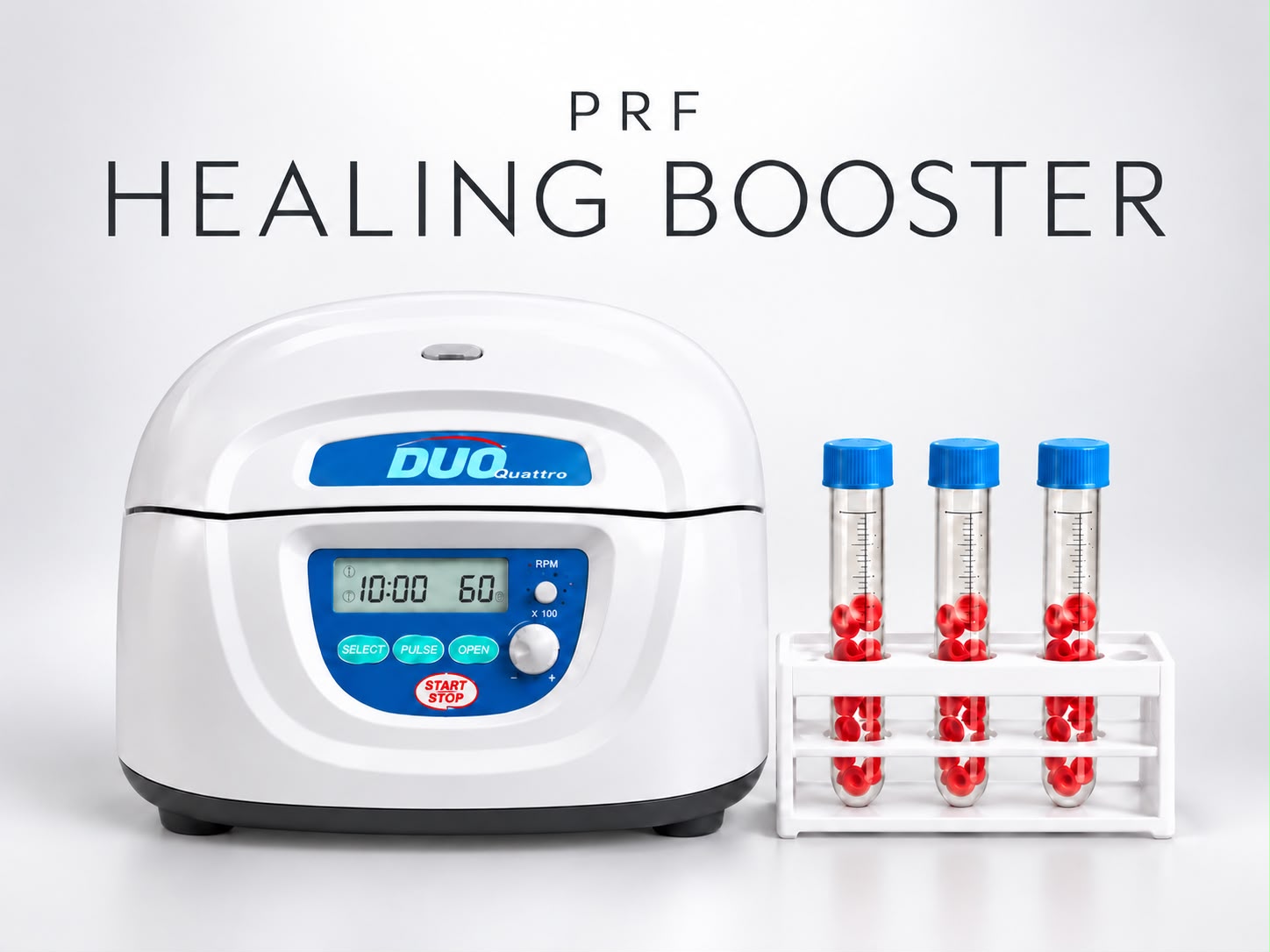
Related: PRF
Where bone has to be rebuilt before an implant can be placed, PRF is frequently used as part of the same surgical appointment. It is an adjunct to the graft, not a substitute for it.
Explore other treatments
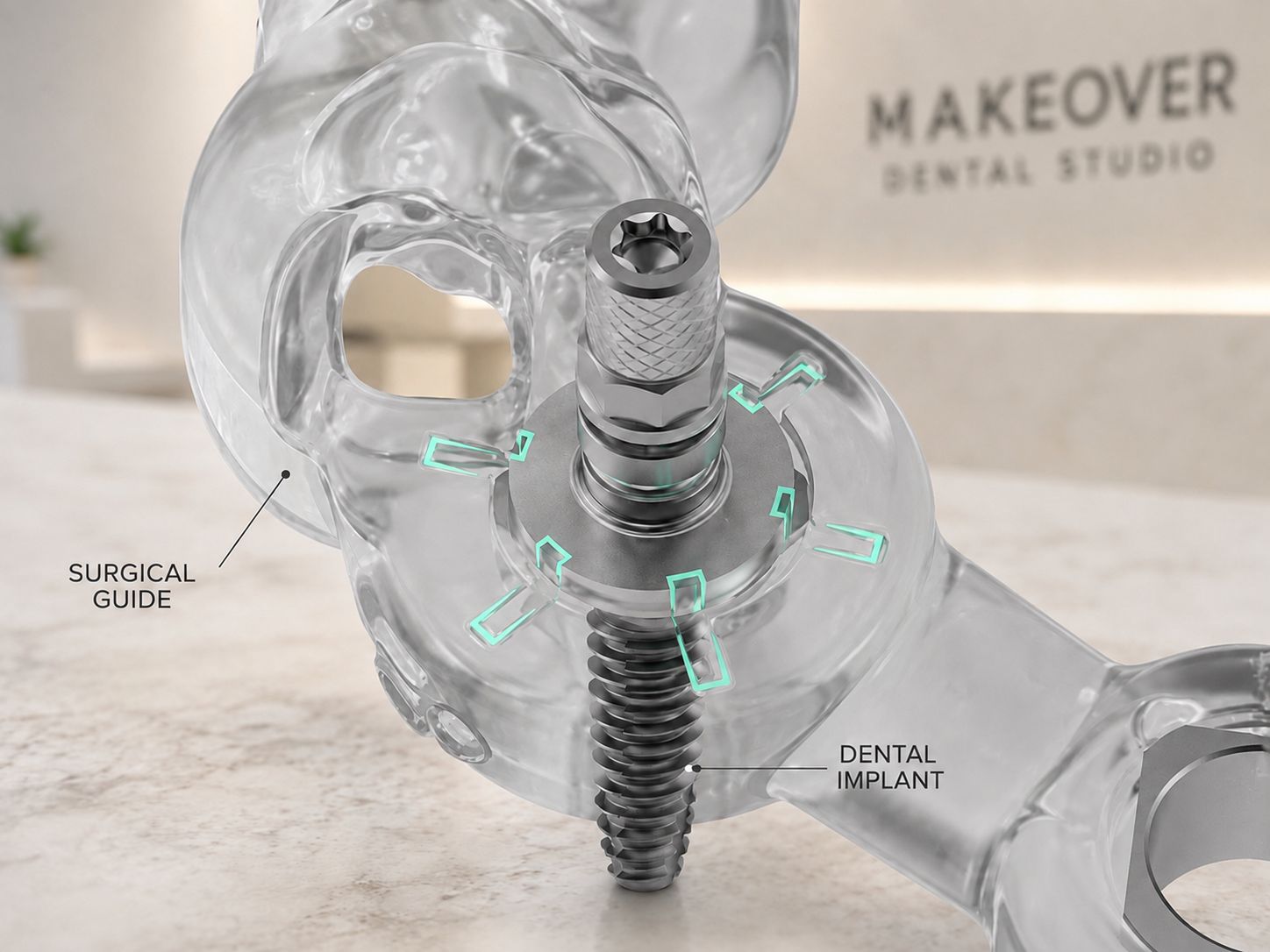


The answer starts with your scan, not with a plan someone already made.
Whether you need this procedure at all is a question imaging answers, and the reasoning behind it should be visible to you. If a shorter route exists in your case, that is the one you will hear about.
Mon-Fri 9:00am – 6:00pm
Sat 9:00am – 4:00pm
Request your consultation
If another clinic has told you that you need a graft, a second reading of your imaging is a reasonable place to start. You will get an opinion on whether it is necessary, and on whether the implant could be placed without it.
US: +1 (619) 202-0423
MX: +52 (664) 634-2023
makeoverdentalstudio@outlook.com
Frida Kahlo 10410, Torre Quatro, 1st floor, office 106
Zona Urbana Rio, Tijuana, B.C. 22010
Mon-Fri 9:00am – 6:00pm | Sat 9:00am – 4:00pm