
Prepless Veneers
A new smile that did not require grinding your teeth down to get it.
A veneer that goes over the tooth instead of into it. In a true prep-less case nothing is ground down and the enamel underneath stays as it is — and that is the whole point, not a detail of the finish.
The honest part: not every smile is a prepless case. Tooth position, color and bite decide it, and pretending otherwise produces bulky, unnatural results. Here the evaluation comes first, and if your case needs a different approach you will hear it directly, with the reasons.

Who does your prepless veneers
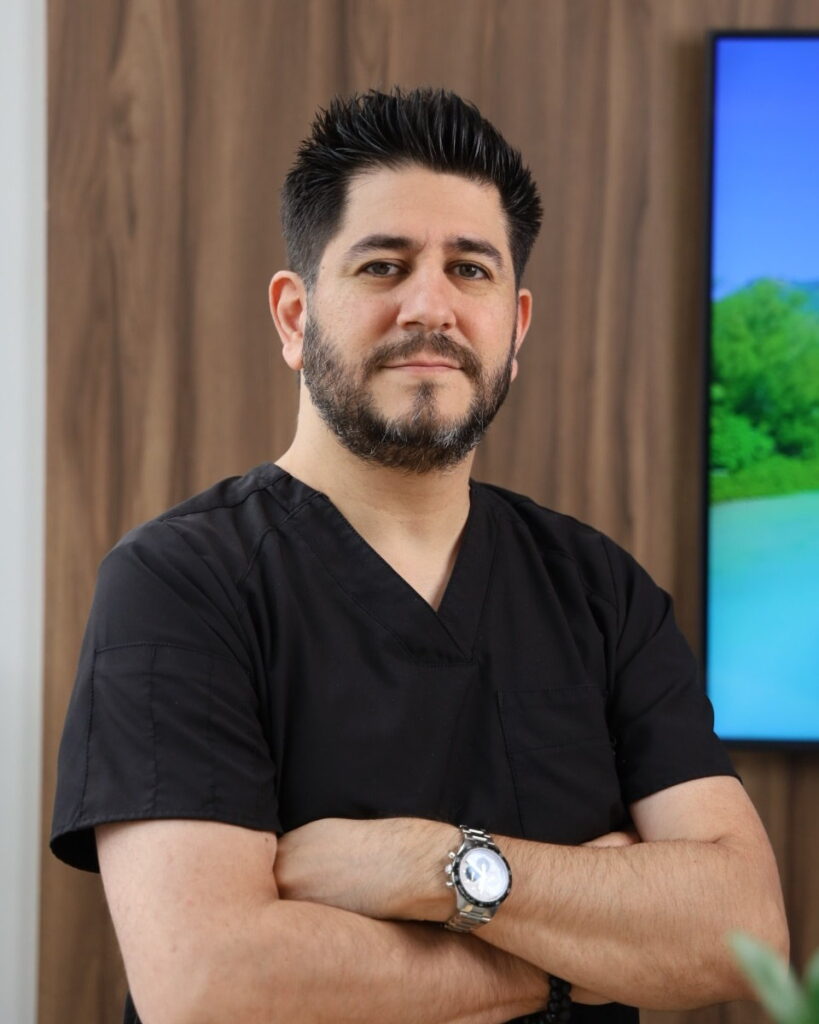
Prepless cases here are handled by Dr. Rafael Cortés Álvarez, Director of Makeover Dental Studio. Cédula profesional 5933630.
How a prepless case is built
Evaluation and digital design
Photographs, a digital scan and your bite are studied first. The design is planned on screen against your own anatomy — with a 3Shape digital workflow, not by eye.
Try-in before commitment
You see and approve the shape and shade before the veneers are made final. With little or no enamel removed, you are not locked in by drilling that already happened.
Bonding, and a bite check
The veneers are bonded and the bite is verified so the porcelain lives a long life. You leave with care instructions and a follow-up plan.
How they are planned
- Intraoral digital scanning — a 3D replica of your teeth, with no impression trays.
- 3D facial scanning — your features and your expressions, not only the teeth.
- Radiographs and clinical evaluation — the structure under the enamel.
- 3Shape and exocad — the scans and the radiographs come together in a single digital file, where the doctors and the laboratory’s 3D smile design technician work the case together, down to a piece of 0.2 to 0.3 millimetres.
The material
Two ceramics, and in prep-less the choice matters more than usual, because the piece has to be thin and still survive.
- IPS e.max lithium disilicate — it presses to a very thin profile and keeps its resistance to daily wear and chipping.
- Feldspathic porcelain, built by hand — the ceramist blends the powders and builds the piece up in micro-layers with a brush. Because it is worked by hand it can be finished at 0.2 to 0.3 millimetres, which is what makes it the material of choice for prep-less cases, and it is where the depth, the translucency gradients and the way light leaves the surface come from.
What the approach buys you
- Your enamel is not removed. A conventional veneer is a decision you cannot take back; this one leaves the tooth underneath intact, so your options later stay open.
- There is no drilling, so there is little to numb. A computer-controlled anesthetic delivery is used only at the gum line, to tuck the margin under the tissue so the veneer comes out of the gum instead of sitting on it.
- No temporaries. You are not wearing acrylic provisionals while the laboratory works.
Seen before it is permanent
The restorations are tried in before anything is bonded: appearance, speech and bite are checked with you and adjusted until it is right. The bond between the porcelain and etched natural enamel is what holds it, and in about 95% of cases the veneers are cemented at that same appointment.

Am I a candidate for prepless veneers?
It depends on where your teeth sit, their color and how your bite closes. Small, worn or slightly spaced teeth are often ideal. Heavily rotated teeth or a deep bite may call for orthodontics first or for a different veneer design — and you will be told which case is yours before anything begins.
They are as thin as a contact lens and nothing is removed from the tooth, so they cannot cover what would first need thickness taken away: crowded or rotated teeth, deep internal staining, major structural defects, or a tooth that has had root canal treatment. Those cases are usually better served by conventional porcelain veneers, and which one applies is decided from your scan.
Are prepless veneers really reversible?
When no enamel is removed, the tooth underneath remains as it was — that is the meaning of prepless. Some cases still benefit from minimal, conservative adjustment, and if yours does, the exact extent is explained before you approve the plan.
Biologically, yes — the enamel underneath is intact, and that is what makes them reversible in a way a conventional veneer is not. In practice, lifting bonded porcelain off enamel takes a dental laser and magnification to do it without touching the tooth. Reversible describes your options, not a casual afternoon.
What it costs
Prices in USD. Every plan is confirmed after imaging and clinical evaluation; the written estimate you receive before treatment is the one that applies.
What patients say
“From the moment I first reached out by email, my experience with Makeover Dental Studio has exceeded every expectation. The clinic itself is state-of-the-art, but what truly sets it apart is the incredible team behind it.”
“I went in there as a walk in and came out a happy customer. Great service and beautiful facility.”
“Very pleased and impressed with the professional service and attention given at this clinic. All of the staff is very attentive. Dr. Erika answered all my questions and concerns, she explained in detail the whole process of my braces…”
“Thank you so much for saving the day. I don’t remember the last time I had such a painful toothache. My wisdom teeth were definitely not helping. Thank you for taking me in last second…”
Quoted exactly as written. All 479 reviews on Google →
Frequently asked
What patients ask before they book. If yours is not here, the fastest answer is a call.
- Your case planned in 3D before treatment begins
- A treatment plan written in English
- A direct line to the clinic once you are home
Traditional veneers require reshaping the tooth; prepless veneers are bonded over your enamel with little or no reduction. The trade-off is that case selection matters more — which is why the evaluation decides.
Not when the case is selected honestly and the porcelain is designed thin. Bulky results come from forcing prepless veneers onto cases that needed another approach — the exact thing the evaluation exists to prevent. That was the old objection, and it came from adding thickness without planning the margin. Here the intraoral and the facial scans go into exocad and the margins are planned before anything is made, and a computer-controlled anesthetic is used at the gum line so the margin can be tucked under the tissue. The veneer comes out of the gum rather than sitting on it.
Porcelain bonded to healthy enamel is one of the most durable bonds in dentistry. Longevity depends on your bite, your habits — night grinding matters — and regular check-ups.
Often, yes. The veneer shade is matched to the smile around it, so whitening first means the whole result can be brighter. The sequence is part of your written plan.
Yes — the try-in stage exists exactly for that. Nothing is bonded until you have approved the shape and shade.
Thin is not the same as fragile. Once the porcelain is bonded to untouched enamel the piece and the tooth work as one unit — and the bond to intact enamel is stronger than to a prepared surface, which is part of why this works at all. Unbreakable they are not: biting ice or something hard can still fracture one.
Like your own teeth: brushing twice a day with a non-abrasive toothpaste, flossing, and the routine cleanings. If you grind at night, a nightguard is part of the plan rather than an extra.


See the design before you commit to anything.
A scan, a digital design and a try-in — your new smile is approved by you before it exists in porcelain.
Mon-Fri 9:00am – 6:00pm
Sat 9:00am – 4:00pm
Request your consultation
Bring photos of the smile you want to fix — and the one you want. The design conversation starts there.
US: +1 (619) 202-0423
MX: +52 (664) 634-2023
makeoverdentalstudio@outlook.com
Frida Kahlo 10410, Torre Quatro, 1st floor, office 106
Zona Urbana Rio, Tijuana, B.C. 22010
Mon-Fri 9:00am – 6:00pm | Sat 9:00am – 4:00pm