Sinus Lift
Creating the vertical bone height that implants in the upper back jaw require.
The maxillary sinus sits directly above the upper back teeth. When those teeth are lost, the sinus tends to expand downward into the space they occupied, and the bone left between the sinus floor and the ridge is often too thin to hold an implant.
A sinus lift raises the sinus membrane and places grafting material beneath it, creating the height an implant needs. It sounds more alarming than it is: in experienced hands it is a routine, well-documented procedure, and it is the single most common reason an upper implant case becomes possible at all.
There are two approaches — through the crest of the ridge when only a little height is needed, and through a lateral window when more is required. Which one applies is decided on imaging, and it changes both the healing time and whether the implant can be placed in the same session.

Who plans your case
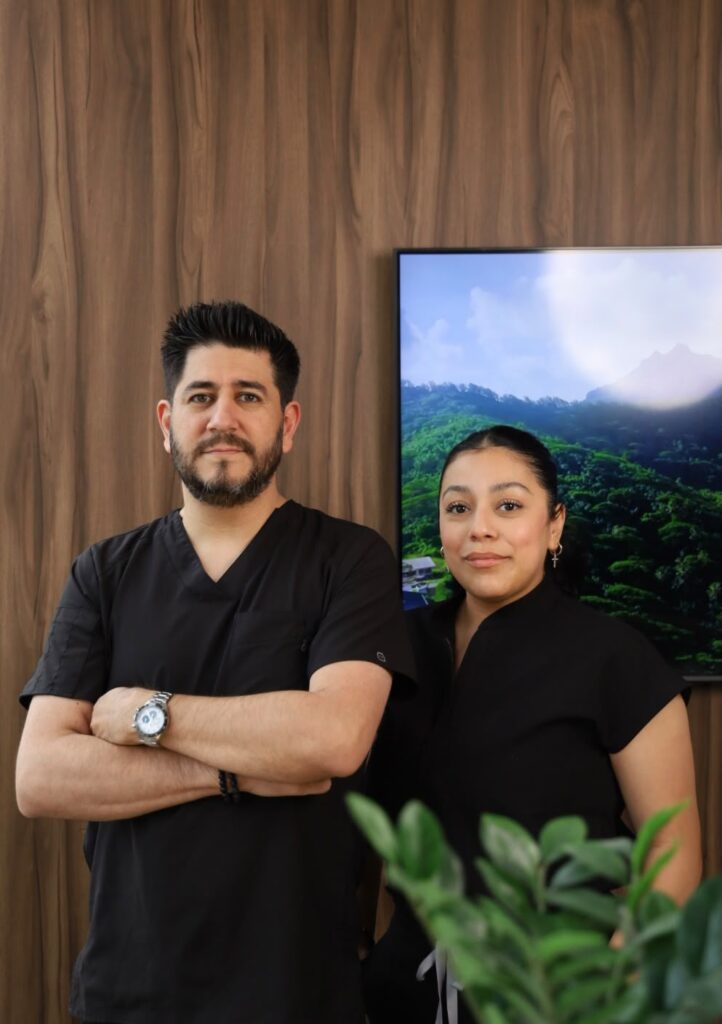
Dr. Rafael Cortés Álvarez, Director of Makeover Dental Studio, is a pioneer of guided implant surgery in Baja: in 2006 he placed the region’s first All-on-6 case using NobelGuide 3D technology, and he has worked with Nobel Biocare for the nineteen uninterrupted years since. He graduated from the Universidad Autónoma de Baja California and holds a diploma from Loma Linda University. His work carries the imprint of two lineages: the direct mentorship of Professor Dr. Alan Kleiman, a pioneer in modern implant research, and the advanced protocols of Dr. Sascha Jovanovic’s continuing-education system, which he keeps refining alongside faculty from the world’s leading implant programs. That is what mentorship passes down, case by case — and it is the method behind the plan presented to you. Cédula profesional 5933630.
A sinus lift is done millimetres from a structure you cannot see with the eye, which is precisely why the case is mapped in three dimensions first. Smaller incisions and less guesswork near the sinus are the point of planning it that way.

Who performs your sinus lift
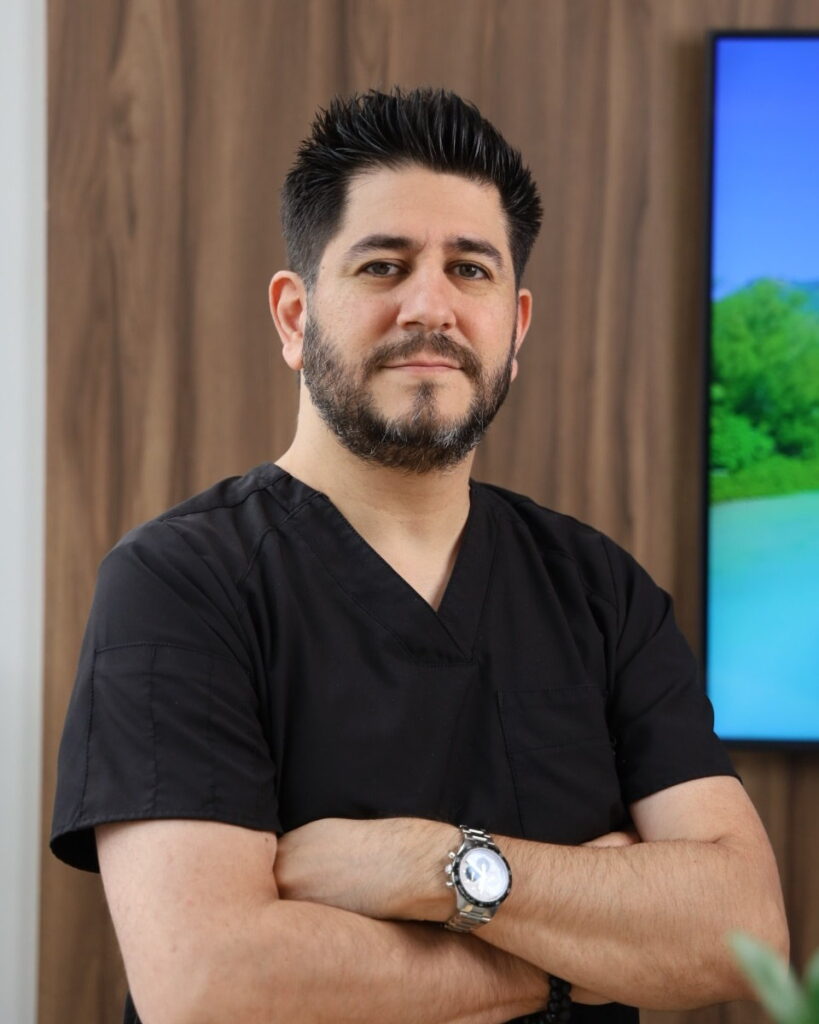
Dr. Jorge Maytorena is a leading surgeon on the dental team. He works closely with the DASS protocol (Digitally Assisted Soft tissue Sculpturing) — the digital workflow developed by Dr. Alessandro Pozzi and taught alongside Dr. Lorenzo Arcuri. This cutting-edge technique maps the bone and gum interface on screen before surgery, so the arch placed that same day is shaped to guide how the tissue heals; this allows a finished full-arch case to read as teeth, rather than as pink acrylic. His practice in Baja California focuses on this advanced implantology and complex oral rehabilitation, with an emphasis on precise clinical planning and a comprehensive approach developed during his specialized training at Instituto Alzaga. He completed his foundational studies as a Dental Surgeon at CEUS Universidad, and all implant surgeries are carried out jointly, ensuring that critical decisions always benefit from collaborative professional expertise (Cédula profesional 13741153).
How the height is created
Measuring what is left
The scan shows the residual bone between the ridge and the sinus floor. That measurement decides the approach and the timing.
Lifting the membrane
The sinus membrane is elevated carefully and graft material placed in the space created beneath it, without entering the sinus cavity itself. A standard sinus lift takes about 30 to 60 minutes, even when the implant is placed in the same session; a lateral window reconstruction takes longer.
Healing, then the implant
The graft consolidates over months into bone capable of holding an implant. In selected cases the implant is placed at the same time.
Why Choose Our Advanced Sinus Lift?
The sinus lift is performed by Dr. Jorge Maytorena, the surgeon on the team who handles the sinus and soft-tissue side of implant work. Four things decide how the procedure goes, and this is how each one is handled here.
The DASK system
The lift is done with the Dentium Advanced Sinus Kit (DASK) — drills and instruments designed specifically for opening and elevating the sinus membrane, rather than improvised tooling. The membrane is the fragile part of this surgery, and the instrumentation exists to respect it. Grafting here is done with Geistlich Bio-Oss®, Straumann® Biomaterials and Zimmer Dental / ZimVie materials, chosen for documented biological predictability rather than for cost.
Predictable success
The approach, the graft volume and the timing are settled from your CBCT before anything is opened, so the surgery follows a plan that was measured rather than decided at the chair. The aim is bone built to last, not a result that has to be revisited. The sinus lift is one of the most reliable and highly predictable procedures in modern dentistry, boasting an outstanding 90 to 98% success rate worldwide, and it is what makes it possible to ensure your investment in a dental implant lasts a lifetime.
Planned around your trip
Patients travelling from San Diego and across California are scheduled so that imaging, surgery and review fit the days you are actually here — with the written plan in your hands before you commit to the trip.
A pain-controlled experience
Anesthesia and sedation options are discussed before the day, and comfort during and after surgery is managed deliberately. There is absolutely nothing to fear: the procedure itself is virtually painless, typically completed smoothly under local anesthesia. For larger reconstructions, intravenous (IV) sedation is available, administered by a certified specialist anesthesiologist.
Faster recovery with PRF therapy
A concentrate made from your own blood, prepared during the same appointment and placed in the surgical site to support healing. It is planned into your treatment when it is indicated ($200 USD), and quoted with the rest of your plan — never added to an estimate after it has been given. Learn how PRF works.
Crestal or lateral: the scan decides
There are two ways into the sinus. Which one applies to you is read from your CBCT before the day of surgery, and the reasoning is shown to you on the images rather than asserted.
The crestal approach
The lift is made through the implant site itself. It suits cases where enough residual height remains and the gain needed is smaller. Less invasive, fewer surfaces opened, and the recovery is usually the shorter of the two.
The lateral approach
A window is opened in the side wall of the sinus. It is used when more height has to be created, or when the anatomy calls for direct sight of the membrane. It is the more involved of the two — and in the case that needs it, it is the one that works.
Travel with Confidence. Return with a Smile.
Everything above exists so that the plan you travel for is the plan you receive. If the scan says a sinus lift is not what your case needs, that is what you will hear.
Why do upper back implants need this so often?
Bone in the upper jaw is less dense than the lower to begin with, and the sinus expands into the space left by missing molars. The combination leaves less height than an implant of adequate length requires.
Is it risky?
The recognized complication is perforation of the sinus membrane, which is managed during surgery when it occurs and rarely changes the outcome. Planning from a three-dimensional scan is what keeps it uncommon.
What it costs
Prices in USD. Every plan is confirmed after imaging and clinical evaluation; the written estimate you receive before treatment is the one that applies.
What patients say
“Thank you so much for saving the day. I don’t remember the last time I had such a painful toothache. My wisdom teeth were definitely not helping. Thank you for taking me in last second…”
“From the moment I first reached out by email, my experience with Makeover Dental Studio has exceeded every expectation. The clinic itself is state-of-the-art, but what truly sets it apart is the incredible team behind it.”
“I went in there as a walk in and came out a happy customer. Great service and beautiful facility.”
“Very pleased and impressed with the professional service and attention given at this clinic. All of the staff is very attentive. Dr. Erika answered all my questions and concerns, she explained in detail the whole process of my braces…”
Quoted exactly as written. All 479 reviews on Google →
Frequently asked
What patients ask before they book. If yours is not here, the fastest answer is a call.
- Your case planned in 3D before treatment begins
- A treatment plan written in English
- A direct line to the clinic once you are home
Not at all. The entire area is completely numbed using advanced local anesthesia, so you will not feel any pain during the procedure. Most patients report feeling only mild, routine pressure.
Swelling usually peaks within 48 to 72 hours and settles from there, with congestion for a few days. Because the sinus connects to your nasal passages, for the first two weeks do not blow your nose forcefully, and if you sneeze, sneeze with your mouth open. Air travel is postponed briefly. The graft itself takes three to six months to grow into bone capable of holding an implant.
It can, when the graft has to consolidate before implants go in. Where a simultaneous approach is possible it does not, and which of the two applies is known from your scan before anything is scheduled.
Sometimes. Shorter implants and angled placement, of the kind used in All-on-4, exist partly to work around the sinus. Whether that applies to you is an imaging question rather than a preference.
The space gained under the lifted sinus lining is filled with graft material, and the options are the same ones used elsewhere in the mouth: your own bone, processed donor, animal-derived or synthetic material, in different presentations — gel, block and particulate — each behaving differently depending on how much height has to be built. Which one is right depends on your case, decided from the studies and your CT scan rather than by eye: Dr. Rafael Cortés or Dr. Jorge Maytorena explain the reasoning before anything is decided.
Two different membranes come up in this procedure and they are not the same thing. The sinus membrane is your own tissue — the lining that is gently lifted to make room for the graft, and keeping it intact is the delicate part of the surgery. Separately, a barrier membrane may be placed over the access window to protect the graft while it heals: like the graft material itself, barrier membranes can be of human, animal or synthetic origin, and some are titanium-reinforced to hold space in larger defects. Cytoplast high-density membranes are used for that purpose.
Related: PRF
A sinus lift is one of the procedures Platelet-Rich Fibrin (PRF) is most often used alongside. It is an adjunct to the surgery, not a substitute for any part of it.
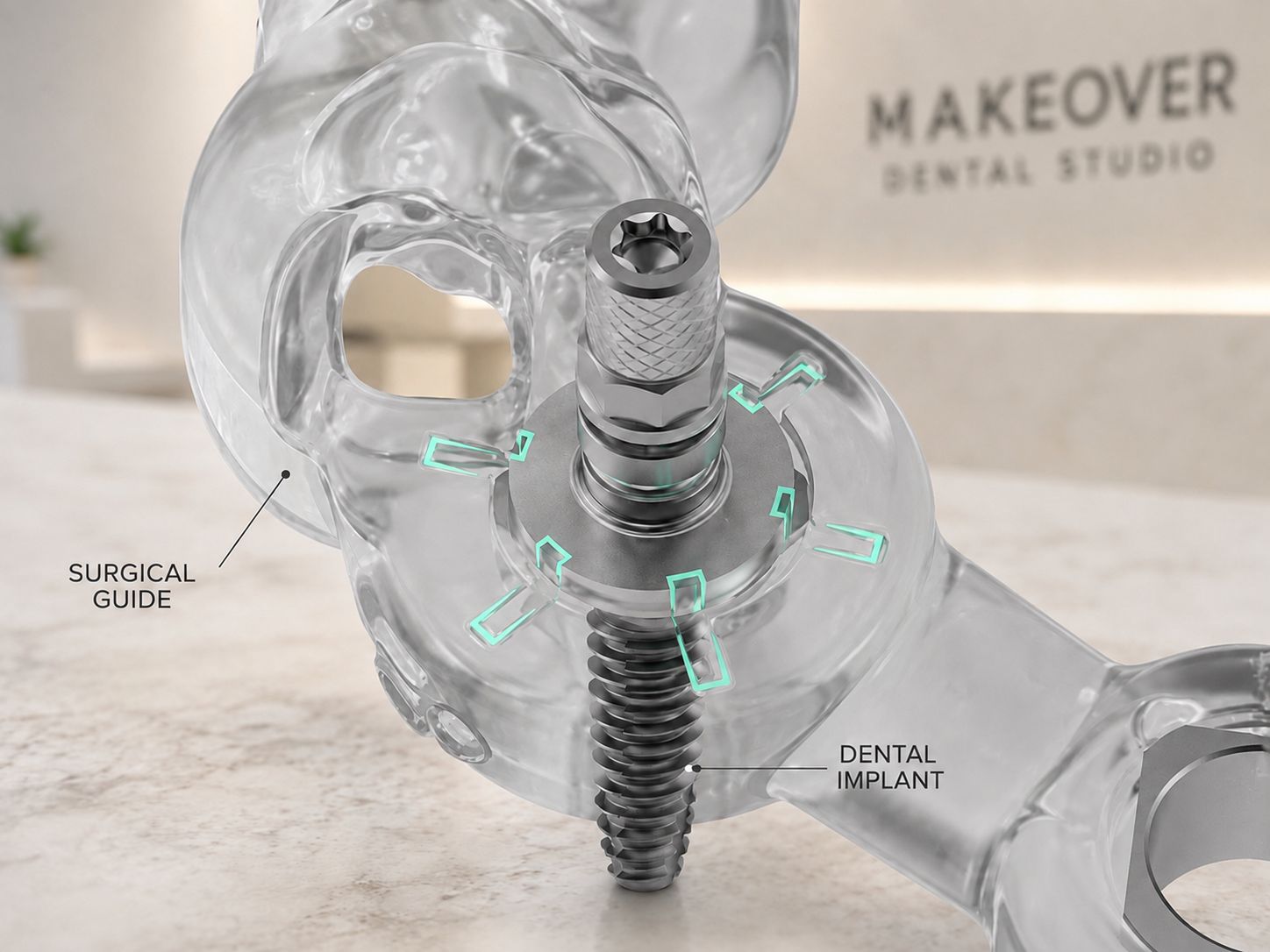


The answer starts with your scan, not with a plan someone already made.
Whether you need this procedure at all is a question imaging answers, and the reasoning behind it should be visible to you. If a shorter route exists in your case, that is the one you will hear about.
Mon-Fri 9:00am – 6:00pm
Sat 9:00am – 4:00pm
Request your consultation
If you have been told that upper implants are not possible, the scan is worth a second reading. A sinus lift changes that answer more often than any other procedure.
US: +1 (619) 202-0423
MX: +52 (664) 634-2023
makeoverdentalstudio@outlook.com
Frida Kahlo 10410, Torre Quatro, 1st floor, office 106
Zona Urbana Rio, Tijuana, B.C. 22010
Mon-Fri 9:00am – 6:00pm | Sat 9:00am – 4:00pm