Dental Bonding
Composite added to the tooth rather than removed from it — the most conservative move in cosmetic dentistry, and the most underused.
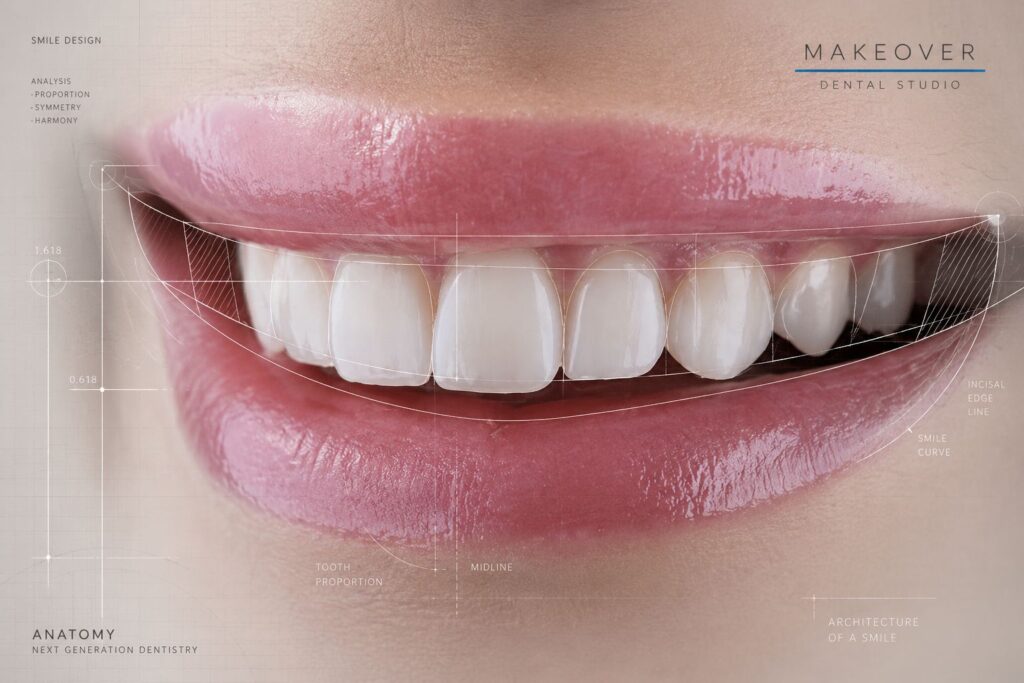
Bonding is tooth-colored composite sculpted directly onto the tooth and hardened in place. A chipped edge, a gap between the front teeth, a tooth that sits slightly short of its neighbour, a worn edge that has gone translucent — all of it can frequently be corrected in a single appointment, usually with little or no preparation of the tooth.
That last point is the one that matters. Porcelain requires enamel to be reduced to make room for it, and enamel does not grow back. Bonding is additive: material is placed onto the surface, and if it needs to be changed later, it is removed and replaced without the tooth being any worse off than it started.
It is not the answer to everything, and it is honest about what it is. Composite picks up stain over the years where porcelain does not, it wears faster, and a large restoration on a heavily loaded front edge will need renewing. In exchange it is reversible, it is quick, and it does not commit you to anything. For a patient in their thirties deciding whether to start down the veneer road, that is a substantial argument.
Who does the bonding
A proud graduate of the Universidad Autónoma de Baja California (2014), Dra. Karla P. Ramírez Nuñez has been an essential cornerstone of the Makeover team for over 12 years. She specializes in advanced cosmetic treatments, full-mouth reconstructions, and managing highly complex aesthetic cases, blending precision with artistry to restore both function and beauty. Cédula profesional 10404814.
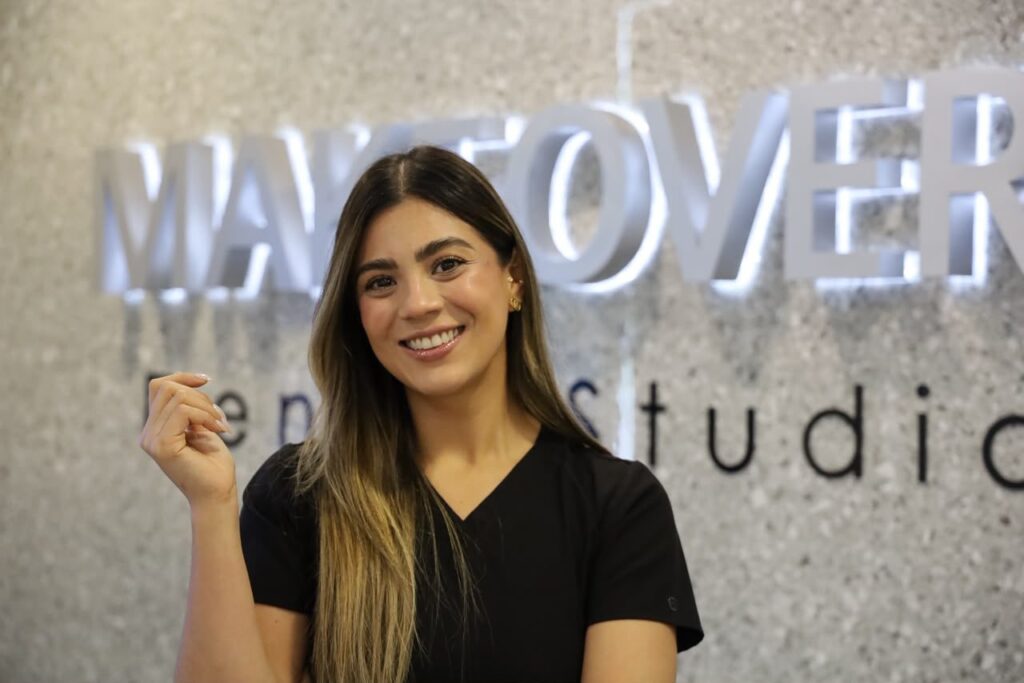
A graduate of the Universidad Autónoma de Baja California (Class of 2015), Dra. Karla Stefany Hernández has been a vital asset to the Makeover Dental Studio clinical team for 7 years. She specializes in restorative and esthetic dentistry, focusing on fixed prosthodontics (crowns, bridges, inlays, and onlays, among others), composite veneers, advanced teeth whitening, and composite restorations. Her expertise also includes removable prosthetics (partial and full dentures) alongside comprehensive general dental care. Cédula profesional 13262947.

Bonding is conservative and reversible, which makes it the right answer more often than patients expect. On a case that does not justify a veneer, saying so is part of the job.
Added, not taken away
Usually the same appointment
Sculpting is done directly in the mouth and finished the same day, which makes it a practical option for a single visit.
Little or no preparation
In most cases the tooth surface is conditioned rather than reduced, and the treatment remains reversible in the way porcelain does not.
Shaped, polished, checked in function
Contour, surface texture and the way the edge meets the opposing teeth are refined before finishing. A bonded edge that takes the full load of the bite will not survive.
Two ways of doing it
Direct
The composite is sculpted and layered onto your teeth in the chair, by hand, in one visit. No laboratory, no waiting, and the result depends on the hand doing it.
Injected
A digital smile design is done first, a clear matrix is made from that plan, and the composite is injected through it onto the teeth. The shape comes out of the plan rather than out of the moment, which makes it more repeatable across several teeth.
Bonding or veneers?
Bonding first, in most cases, and veneers when bonding genuinely cannot deliver the result. The argument for starting conservatively is simple: bonding adds material and veneers remove it. If bonding does not hold up or you want more later, porcelain is still available to you. If you start with porcelain, the enamel is gone and the decision cannot be revisited. Veneers earn their place where the change is substantial, where several teeth need to be brought into a new proportion, or where composite would be carrying more load than it can survive.
Maintenance is the other honest reason to raise porcelain. It does not pick up stain and it does not need polishing on a schedule; composite does both. If you would rather your front teeth were not tied to a recall appointment, say so at the consultation, because it belongs in the discussion. It does not change the order. Bonding first is still the conservative route, and the enamel you keep now is the reason why. Composite does not match porcelain on appearance over the years, and it is fair to say so: porcelain reproduces the translucency and the texture of enamel in a way composite does not hold. Composite looks good, and it looks good sooner — it is often chosen as a first step, or for a few years, and replaced later with composite again or with porcelain. Where no enamel at all should be touched, prep-less veneers are the other conservative route.
How long does bonding last?
Years rather than decades, and the range is wide because it depends on where the composite sits and what it has to absorb. A small chip repair on a tooth that is not taking heavy contact lasts a long time. A rebuilt biting edge on someone who grinds does not. Coffee, tea, red wine and tobacco all stain composite faster than they stain enamel, and an edge that is loaded the wrong way can chip. Neither is the work failing; it is what the material does.
That is why bonding comes with a maintenance appointment rather than without one. Polishing at recall recovers most of the staining and catches a worn or chipped edge while the repair is still small. Renewal is expected eventually, and it is straightforward when it comes. Bonding is not a permanent restoration, and it should not be quoted as though it were. On average 5 to 7 years. Composite is softer and more porous than porcelain or enamel: it chips more easily, it wears, and it picks up stain from coffee, tea, wine and tobacco over the years. That is the material, not the technique. It also needs maintenance — periodic polishing to keep the surface smooth and to stop the margins darkening. A composite veneer that is never polished is one that looks old early.
What it costs
Prices in USD. Every plan is confirmed after imaging and clinical evaluation; the written estimate you receive before treatment is the one that applies.
What patients say
“From the moment I first reached out by email, my experience with Makeover Dental Studio has exceeded every expectation. The clinic itself is state-of-the-art, but what truly sets it apart is the incredible team behind it.”
“Very pleased and impressed with the professional service and attention given at this clinic. All of the staff is very attentive. Dr. Erika answered all my questions and concerns, she explained in detail the whole process of my braces…”
“I went in there as a walk in and came out a happy customer. Great service and beautiful facility.”
“Thank you so much for saving the day. I don’t remember the last time I had such a painful toothache. My wisdom teeth were definitely not helping. Thank you for taking me in last second…”
Quoted exactly as written. All 479 reviews on Google →
Frequently asked
What patients ask before they book. If yours is not here, the fastest answer is a call.
- Your case planned in 3D before treatment begins
- A treatment plan written in English
- A direct line to the clinic once you are home
Frequently, yes, and it is one of the most satisfying uses of the technique. The limit is proportion: closing a wide gap with composite alone can leave the two teeth looking too broad, in which case aligning them first gives a better result.
Usually. It is one of the few cosmetic treatments completed in a single appointment, with no laboratory stage, which makes it well suited to a single crossing.
No. In most cases the enamel is conditioned rather than reduced, and the composite is bonded to the surface. If it is removed later, the tooth is in the condition it was before.
This is where composite beats porcelain: it can be repaired in the mouth. A chipped porcelain veneer usually has to be remade at the laboratory; a chipped composite is usually fixed in one short visit.
How they are shaped. Direct is sculpted by hand, tooth by tooth, in your mouth during the appointment. Injected starts from a digital design: a matrix is made from that plan and the composite is injected through it, so the shape follows the plan rather than the hand. Direct leaves more room to work a single tooth; injected is more repeatable across several.
Usually there is nothing to numb. Since little or no enamel is removed, most cases are done with no anesthesia at all.
Explore other treatments


A design you see and approve before anything is prepared.
The conversation starts with what actually bothers you in a photograph of yourself, not with the name of a treatment. If something smaller than what you came asking for would do it, that is what you will hear.
Mon-Fri 9:00am – 6:00pm
Sat 9:00am – 4:00pm
Request your consultation
If you have been quoted veneers for a chipped edge or a small gap, it is worth asking whether bonding would reach the same result. The answer is yes more often than the quotation suggests.
US: +1 (619) 202-0423
MX: +52 (664) 634-2023
makeoverdentalstudio@outlook.com
Frida Kahlo 10410, Torre Quatro, 1st floor, office 106
Zona Urbana Rio, Tijuana, B.C. 22010
Mon-Fri 9:00am – 6:00pm | Sat 9:00am – 4:00pm