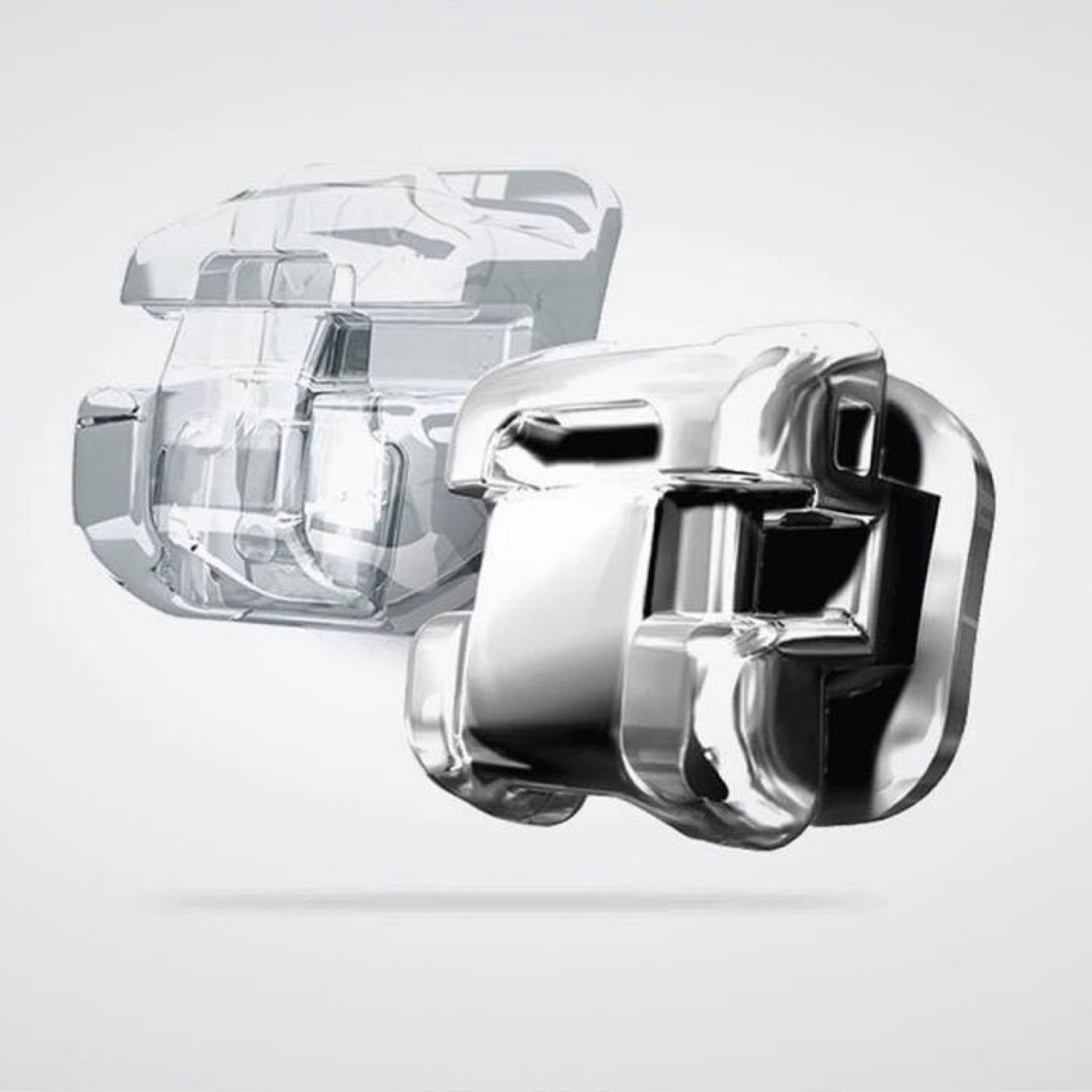
Damon Clear™ Self-Ligating Braces
Enjoy the benefits of advanced self-ligating orthodontics with a more discreet appearance. Damon Clear™ combines the Damon self-ligating technology with clear, aesthetic brackets that blend naturally with your smile.
Unlike traditional braces that rely on elastic ties, Damon Clear uses a self-ligating mechanism designed to work with light, controlled orthodontic forces and reduced friction. This low-force approach allows us to carefully control tooth movement while keeping special attention on the health of the roots, supporting bone, and periodontal tissues throughout treatment.
Damon Clear is an excellent choice for patients who want the control of fixed orthodontics with a more aesthetic and sophisticated appearance. It can address crowding, spacing, crooked teeth, and many bite concerns.
Every treatment is personalized according to your teeth, roots, bone, bite, and facial balance.
Clear. Gentle. Precise. Advanced orthodontics designed around your smile.
Who plans your Damon treatment
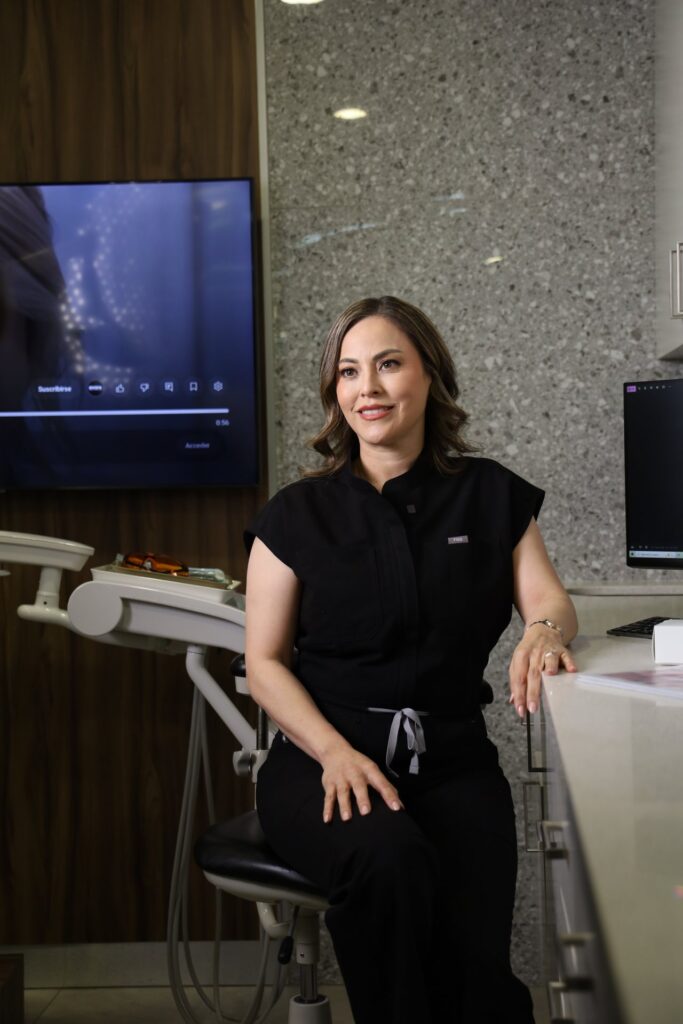
Dra. Erika Padilla Montes de Oca is professionally trained and credentialed in the Damon™ System by Ormco, an advanced self-ligating orthodontic system designed to provide efficient, controlled tooth movement while prioritizing patient comfort and the health of the teeth and supporting structures.
Unlike conventional braces that typically use elastic ties to hold the archwire in place, Damon brackets feature a self-ligating mechanism that allows the orthodontic wire to work with low-friction, biologically compatible forces. When properly planned and managed, this approach can help achieve effective tooth movement with lighter forces and greater attention to the roots, periodontal tissues, and supporting bone.
Every smile is different. Dra. Padilla carefully evaluates each patient’s facial features, bite, dental alignment, bone support, and individual treatment goals before recommending the most appropriate orthodontic system.
With advanced training in Damon orthodontics and extensive clinical experience, her goal is not simply to straighten teeth, but to create a healthy, balanced, functional, and beautiful smile with treatment designed specifically for you.
Modern technology. Personalized orthodontics. Beautiful smiles with a biological approach.

These are not the brackets you had in school
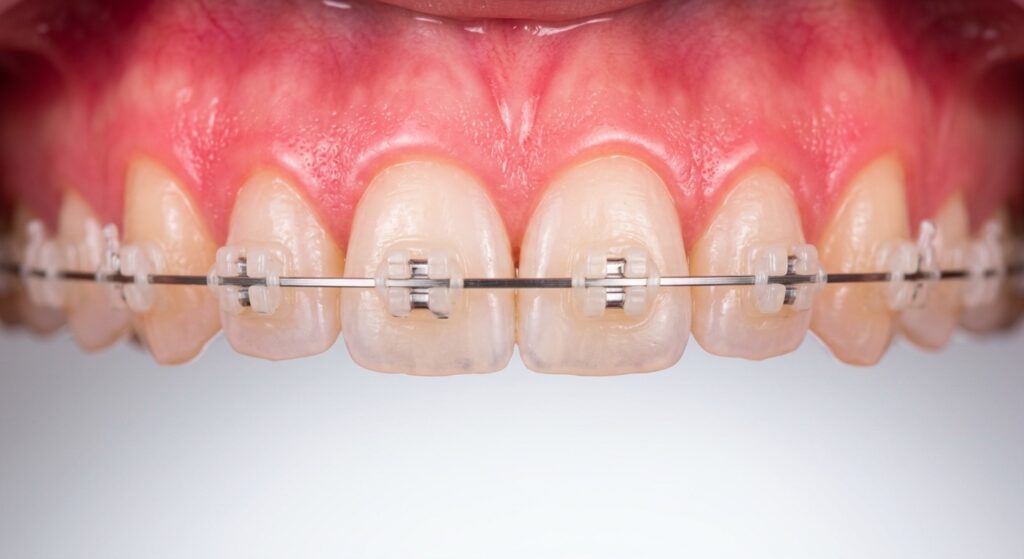
Makeover works with self-ligating brackets — the Damon system. Instead of tying the wire down with a coloured elastic ring, each bracket holds it with a built-in sliding door. No elastic means far less friction, so the teeth move with lighter force, and the force does not fade between visits the way a stretched elastic does.
The practical consequence is fewer adjustment appointments. If every appointment is a border crossing, that is not a technical detail — it is the difference between four trips and eight.
What you can wear
Metal self-ligating (Damon) — the default here. Smallest profile, least friction, fewest visits.
Clear self-ligating — the same mechanism in a tooth-coloured ceramic body, for the teeth that show.
Clear aligners — Invisalign and ClearCorrect, for cases where the movement suits them.
Which one fits is decided from the scan, not from a price list. Orthodontics here is handled by Dra. Erika Padilla Montes de Oca, who treats orthodontic cases exclusively — the same clinician plans your case, bonds the appliance and sees you at every adjustment.
Where fixed appliances hold the advantage
Control in three planes
A wire in a bracket can rotate, torque and move a tooth bodily. That range is what complex cases need and what a tray delivers less predictably.
Nothing depends on compliance
The appliance works whether or not you remember it. For treatments where wear time is the risk, that removes the largest variable.
Ceramic and self-ligating options
Tooth-colored brackets and self-ligating systems reduce both visibility and the number of adjustment appointments, which matters when the appointments involve a border crossing.
Braces the same day you arrive
A patient crossing from San Diego used to lose a week to orthodontics: one visit for records, then home, then a second trip to bond the appliance. Here the whole sequence runs in one visit — about four hours from walking in to walking out wearing the brackets. One crossing instead of two.

01
Specialist assessment
The orthodontist examines the case in person and decides whether it can be bonded that day. This is the step that decides everything else.
02
Orthodontic records
Photographs, scan and the radiographs the case needs — taken here, the same morning, not requested from somewhere else.
03
Records loaded to the digital platform
The case goes onto the planning platform while you are still in the building, which is what removes the week of waiting.
04
Case reviewed and appliance bonded
Thirty minutes to review the plan, then the brackets go on. You leave with the appliance in place.

Should I have braces or aligners?
It depends on the movements your case needs, and that is a diagnosis rather than a preference. Aligners suit mild to moderate crowding, spacing and relapse after earlier treatment. Fixed appliances are more predictable for significant rotations, for moving roots rather than tipping crowns, for closing extraction spaces and for correcting bites in the vertical dimension. There is also a compliance question worth being honest with yourself about: an aligner only works while it is in your mouth. You should leave a consultation knowing which category you are in and why, not which appliance the practice prefers to sell.
Are braces still uncomfortable?
The appliance is considerably less bulky than the one most adults remember, and self-ligating brackets do without the elastic ties that used to collect stain and add friction. What has not changed is the first week: teeth are tender as they begin to move, and the inside of the lip needs a few days to adapt. After that most patients stop noticing the appliance, and the adjustment appointments themselves are brief.
Orthodontic micro-implants
Some movements need something to pull against. Without a fixed anchor the teeth you are trying to move and the teeth you are pulling from both shift, and the case ends up somewhere between the two.
A micro-implant — a titanium screw a few millimetres long, placed in the bone between the roots — gives that fixed point. It makes movements possible that used to require headgear, extractions or surgery: closing large spaces, uprighting molars, intruding teeth that have over-erupted. It is placed under local anaesthetic in a few minutes and removed when the movement is finished.
What patients say
“Very pleased and impressed with the professional service and attention given at this clinic. All of the staff is very attentive. Dr. Erika answered all my questions and concerns, she explained in detail the whole process of my braces…”
“From the moment I first reached out by email, my experience with Makeover Dental Studio has exceeded every expectation. The clinic itself is state-of-the-art, but what truly sets it apart is the incredible team behind it.”
“I went in there as a walk in and came out a happy customer. Great service and beautiful facility.”
“Thank you so much for saving the day. I don’t remember the last time I had such a painful toothache. My wisdom teeth were definitely not helping. Thank you for taking me in last second…”
Quoted exactly as written. All 479 reviews on Google →
Frequently asked
What patients ask before they book. If yours is not here, the fastest answer is a call.
- Your case planned in 3D before treatment begins
- A treatment plan written in English
- A direct line to the clinic once you are home
Age is not the limiting factor; periodontal health is. Bone and gum support determine what movement is safe, and adults in good periodontal condition are treated routinely. Where there has been bone loss, treatment is still often possible with lighter forces and closer monitoring.
Intervals are planned around travel and spaced further apart than a monthly schedule where the mechanics allow, which is one of the practical advantages of self-ligating systems. The schedule is agreed before treatment begins.
Frequently, yes, and it is a common arrangement: tooth-colored brackets on the teeth that show and metal on the back teeth where they are not visible and take more load.
Explore other treatments


Whether aligners suit your case is a question with a real answer.
What decides your treatment is the movement your teeth need — not the appliance you had in mind. If a different appliance would give you a better result, we’ll tell you honestly. And your appointments are planned around how far you’re driving to see us.
Mon-Fri 9:00am – 6:00pm
Sat 9:00am – 4:00pm

Request your consultation
An orthodontic consultation gives you a diagnosis, the options that fit it, and a clear statement of what each one can and cannot correct. The appliance is the last decision, not the first.
US: +1 (619) 202-0423
MX: +52 (664) 634-2023
makeoverdentalstudio@outlook.com
Frida Kahlo 10410, Torre Quatro, 1st floor, office 106
Zona Urbana Rio, Tijuana, B.C. 22010
Mon-Fri 9:00am – 6:00pm | Sat 9:00am – 4:00pm