
Teeth Whitening
In-office and take-home protocols, matched to why your teeth darkened in the first place.
Not all discoloration responds to whitening. Surface staining from coffee, tea, wine and tobacco responds well. Intrinsic discoloration — tetracycline staining, trauma to a single tooth, the natural darkening of dentine with age — responds partially or not at all, and repeating the treatment does not change that. Dentine that has yellowed with age behaves the same way, and repeating the treatment does not change that.
Knowing which one you have before you begin is what separates a good result from a disappointing one. It takes an examination rather than a guess, and where whitening will not get you where you want to be, you should hear that before you pay for it.
Whitening is also the correct first step before veneer or crown work. Restorations cannot be lightened afterwards, so the shade of everything that follows is chosen against teeth that are already where you want them.
Who does your whitening
A graduate of the Universidad Autónoma de Baja California (Class of 2015), Dra. Karla Stefany Hernández has been a vital asset to the Makeover Dental Studio clinical team for 7 years. She specializes in restorative and esthetic dentistry, focusing on fixed prosthodontics (crowns, bridges, inlays, and onlays, among others), composite veneers, advanced teeth whitening, and composite restorations. Her expertise also includes removable prosthetics (partial and full dentures) alongside comprehensive general dental care. Cédula profesional 13262947.
Whitening is the least invasive treatment on this site, and the one most often sold to people who did not need it. What it can and cannot change is established from the shade guide, in person, before you pay for it.

A design you see and approve before anything is prepared.
The conversation starts with what actually bothers you in a photograph of yourself, not with the name of a treatment. If something smaller than what you came asking for would do it, that is what you will hear.
Mon-Fri 9:00am – 6:00pm
Sat 9:00am – 4:00pm
Getting a predictable result
Diagnosis of the stain
Surface staining, intrinsic discoloration and a single dark tooth are three different problems with three different answers.
Protocol chosen
In-office treatment for speed, custom trays for gradual control, or a combination. Existing restorations and sensitivity influence the choice.
Maintained, not repeated blindly
Results fade with the same habits that caused the staining, so a maintenance routine is part of the plan rather than a return visit.
How the whitening is done
In-office
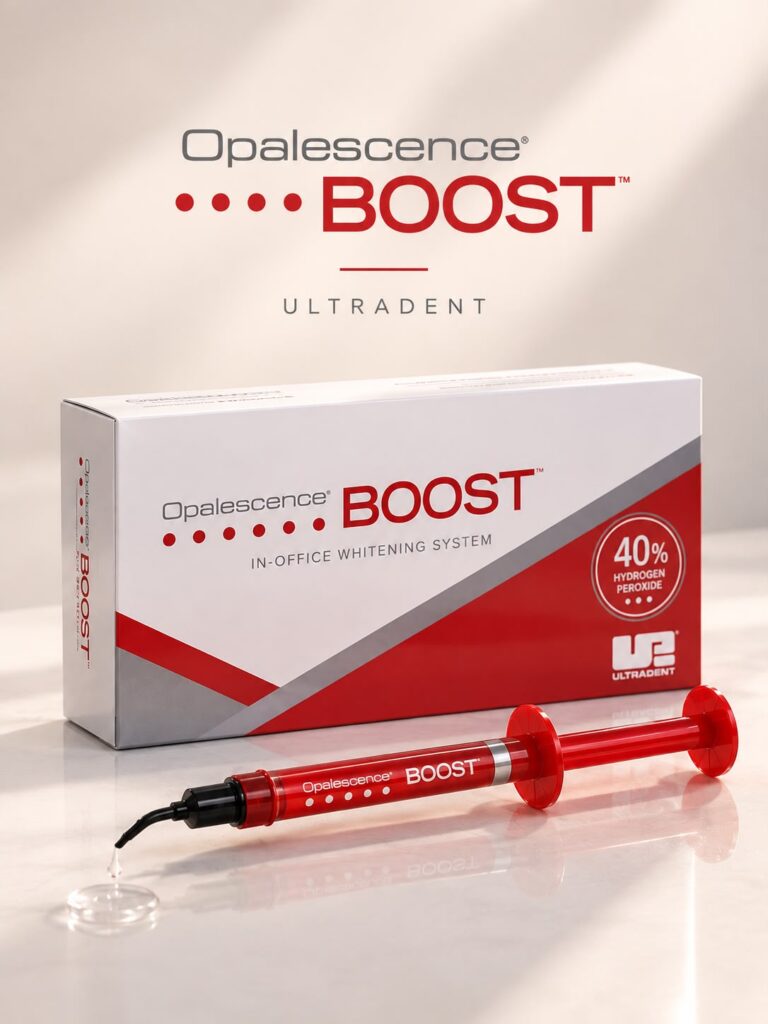
The gels used here are Ultradent Opalescence Xtra Boost, and they are chemically activated — there is no light involved.
That is deliberate. Whitening lamps do not make the bleach work better; what they add is heat, and heat dehydrates the tooth, which is where a good part of the sensitivity after a session comes from. Taking the light out removes that without costing you shade.
The formula also carries potassium nitrate and fluoride, which is what keeps sensitivity down during the session.
Take-home kit
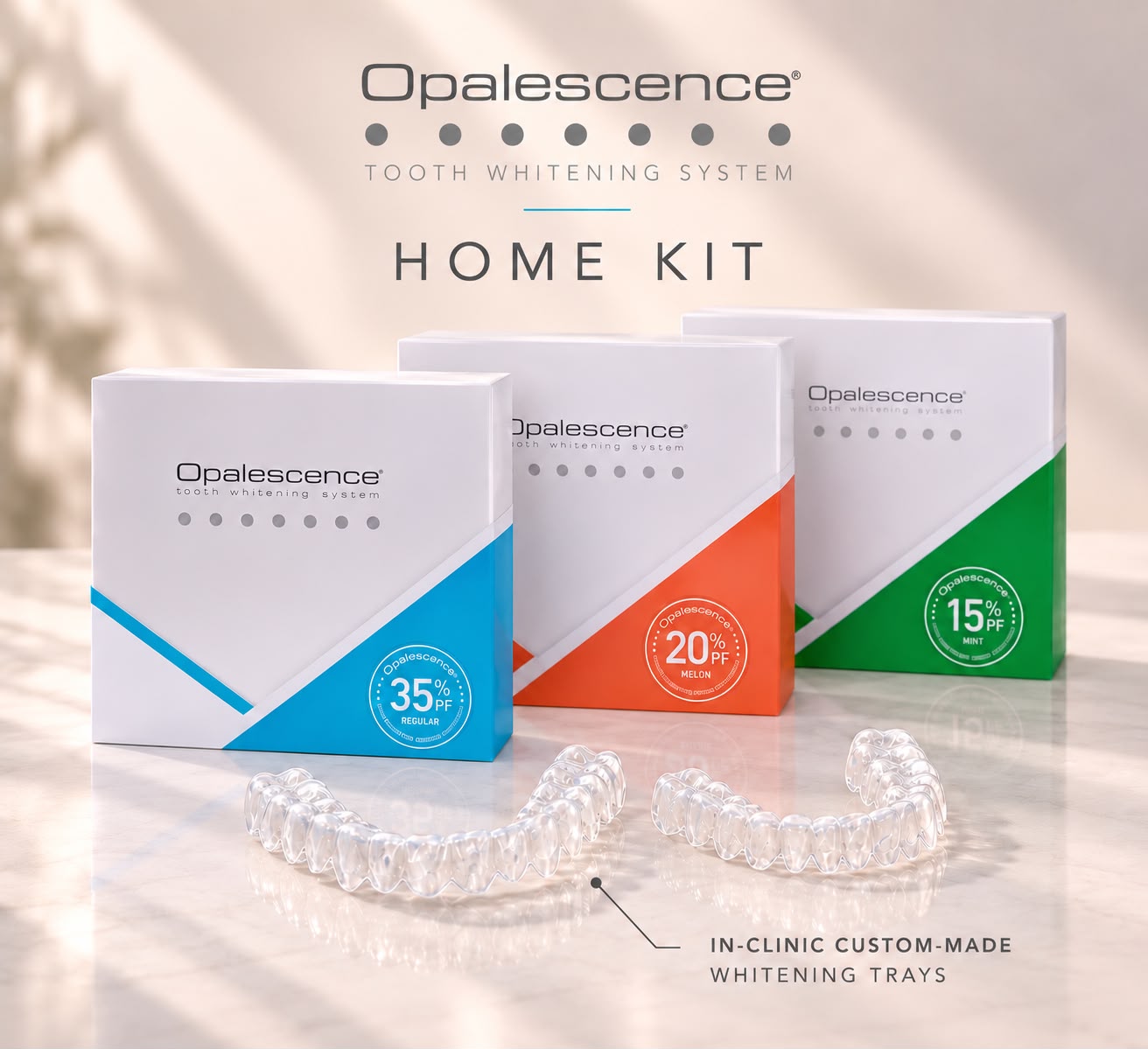
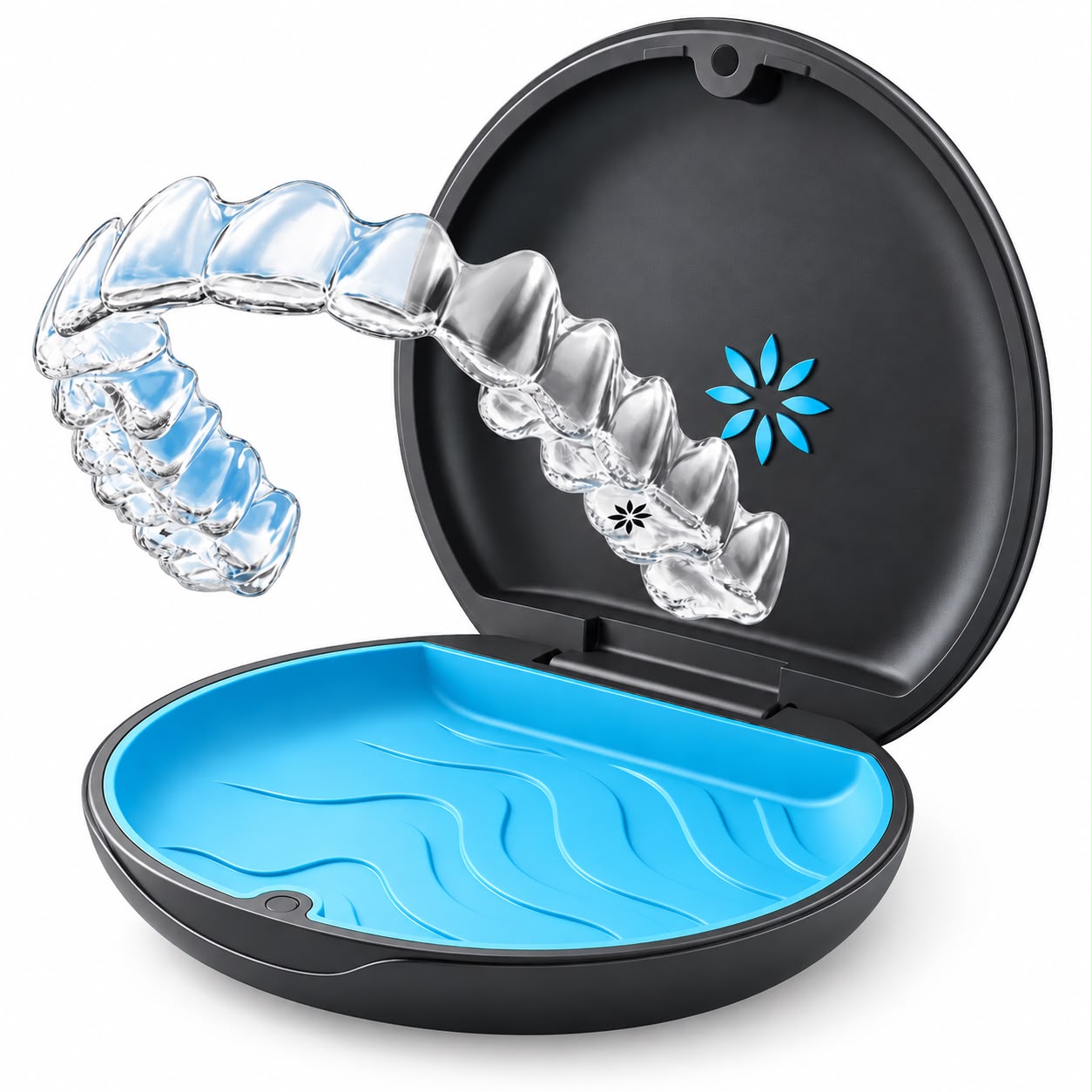
The trays are made the same day. You do not come back for them: the arches are scanned at the consultation and the trays are made here that same day — which matters if you crossed the border to get here.
The gel is Ultradent Opalescence PF and comes in four concentrations. Which one you get depends on how sensitive your teeth are, not on what is in stock:
- 10% — for teeth that are already sensitive. Worn 8 to 10 hours, usually overnight.
- 15% — the middle option. 4 to 6 hours, day or overnight.
- 20% — faster, for enamel that tolerates it. 2 to 4 hours.
- 35% — the fastest. 30 to 60 minutes a day.
The tray being made for your mouth is the whole point. Over-the-counter strips and one-size trays let gel onto the gum, and that is where most of the sensitivity people complain about comes from.
Will my crowns and fillings whiten too?
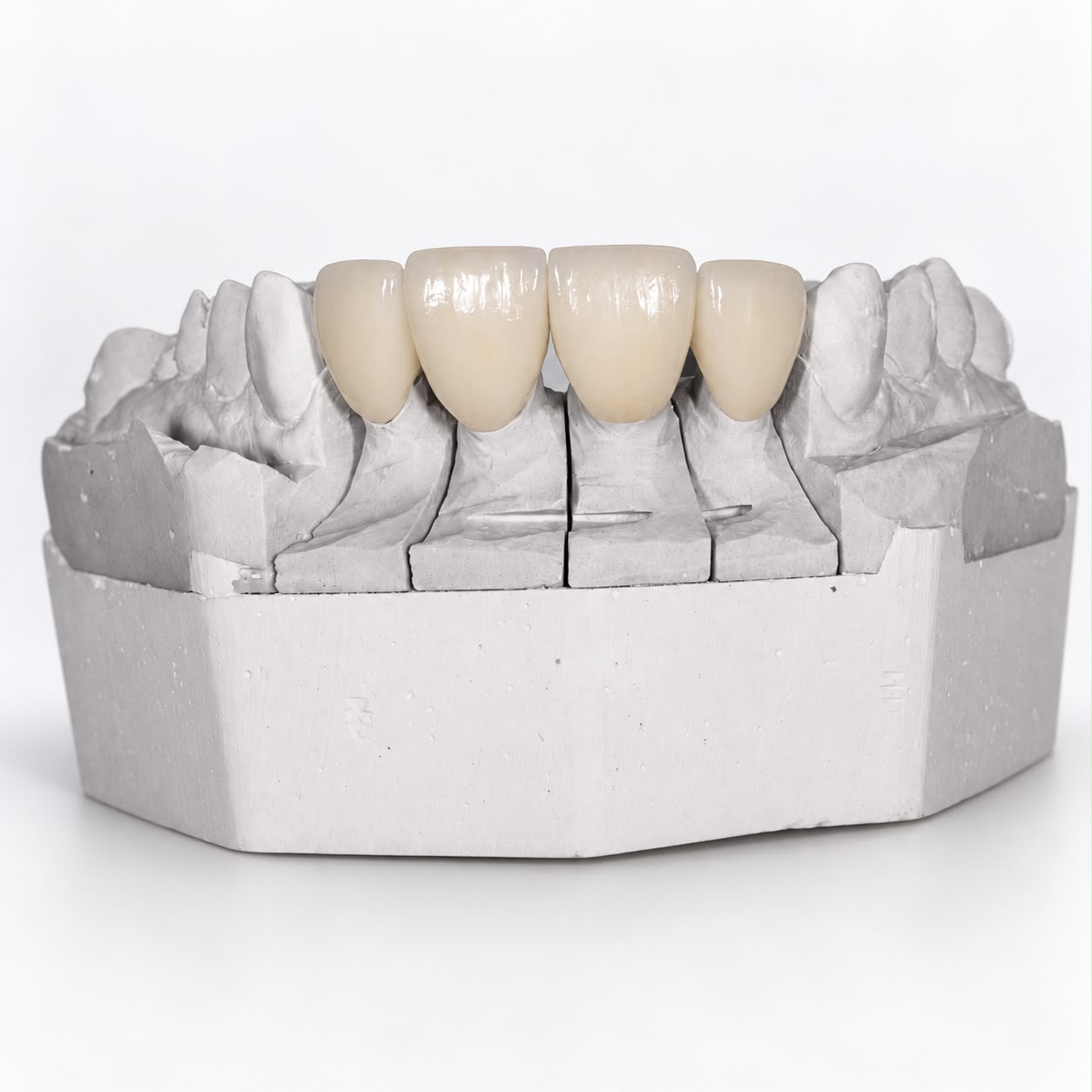
No. Porcelain and composite keep their original shade, which is why whitening comes before restorative work in the visible zone, and why existing restorations sometimes need replacing afterwards to match. The shade of everything that follows is chosen against the whitened teeth rather than against the old colour, so when veneers or crowns are part of the plan the natural teeth are whitened first.
What it costs
Prices in USD. Every plan is confirmed after imaging and clinical evaluation; the written estimate you receive before treatment is the one that applies.
Before & After
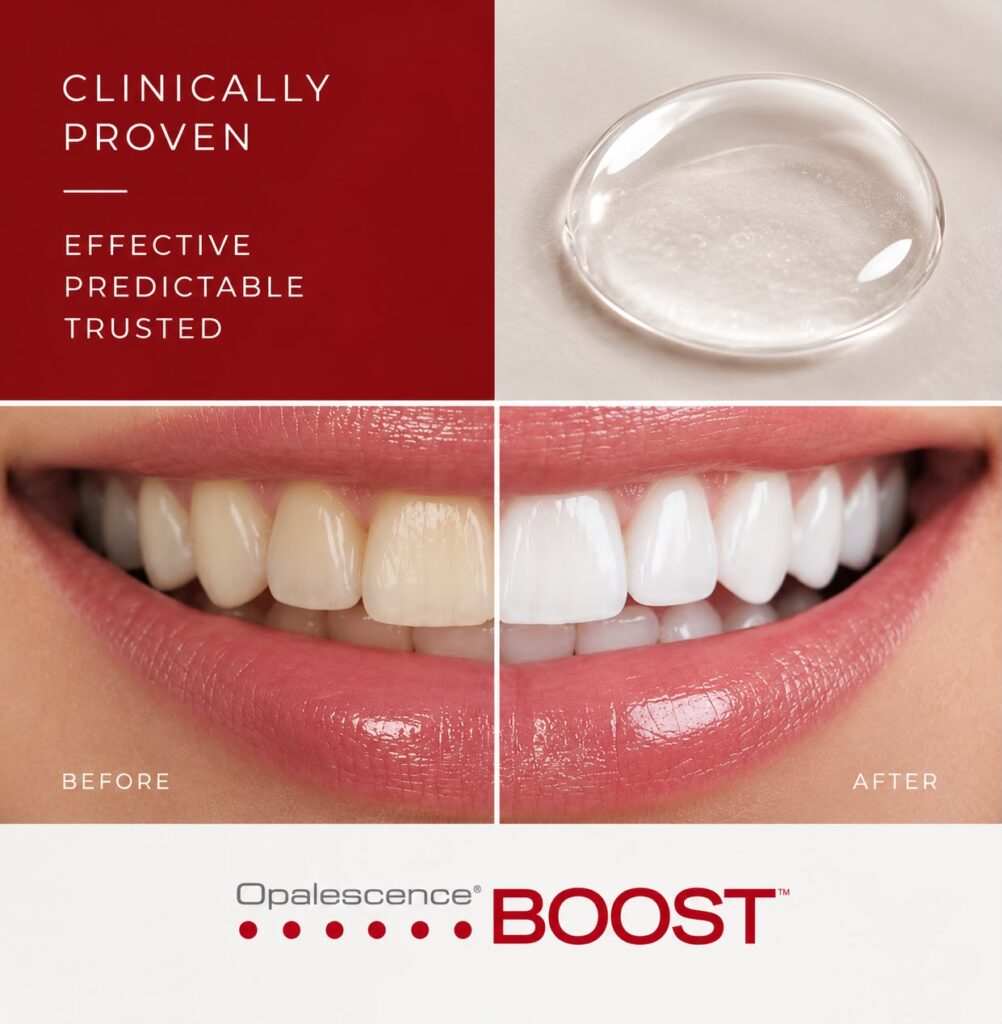
Whitening results are recorded against a shade reference in consistent lighting, before and after, because ambient light and a phone camera can show a change that is not there. The shade tab is the only honest witness.
What patients say
“From the moment I first reached out by email, my experience with Makeover Dental Studio has exceeded every expectation. The clinic itself is state-of-the-art, but what truly sets it apart is the incredible team behind it.”
“Very pleased and impressed with the professional service and attention given at this clinic. All of the staff is very attentive. Dr. Erika answered all my questions and concerns, she explained in detail the whole process of my braces…”
“I went in there as a walk in and came out a happy customer. Great service and beautiful facility.”
“Thank you so much for saving the day. I don’t remember the last time I had such a painful toothache. My wisdom teeth were definitely not helping. Thank you for taking me in last second…”
Quoted exactly as written. All 479 reviews on Google →
Frequently asked
What patients ask before they book. If yours is not here, the fastest answer is a call.
- Your case planned in 3D before treatment begins
- A treatment plan written in English
- A direct line to the clinic once you are home
Usually because that tooth has had trauma or endodontic treatment, and internal discoloration does not respond to external whitening. It is handled differently, with internal bleaching or a restoration.
In-office whitening is a single appointment. Take-home trays need an impression or scan first, and the trays can be collected on the same trip or sent afterwards.
It depends almost entirely on habits, since coffee, tea, red wine and tobacco return the stain that was removed. Maintenance with your own trays keeps a result rather than repeating the whole treatment. On average that is 1 to 3 years, depending on what you drink and whether you smoke. Since you keep the trays, refreshing it is a syringe of gel from the clinic, not a new treatment.
Because the light is not what whitens — the gel is. A lamp or a laser adds heat, and heat dehydrates the tooth, which makes it look whiter the moment you get out of the chair and then fades over the following days as the tooth rehydrates. That same dehydration is where the sharp sensitivity after a session comes from. The gel used here is chemically activated, so what you walk out with is the shade the gel actually produced, and you keep it.
About 45 to 60 minutes in the chair.
Wait about 48 hours before coffee, red wine, berries, soy sauce or tobacco. For the first couple of days the enamel takes up stain more easily, so keeping to pale food and drink in that window protects the result — water, milk, chicken, white rice and pasta are all fine. After that, normal diet.
Yes, and it is the usual recommendation. The in-office session does the bulk of the change in one appointment; the trays hold it and let you touch up months later without booking anything.
Explore other treatments


Request your consultation
The useful first step is finding out what kind of discoloration you have and whether whitening will reach it. That is a short appointment, and it saves the disappointment of a treatment that was never going to work.
US: +1 (619) 202-0423
MX: +52 (664) 634-2023
makeoverdentalstudio@outlook.com
Frida Kahlo 10410, Torre Quatro, 1st floor, office 106
Zona Urbana Rio, Tijuana, B.C. 22010
Mon-Fri 9:00am – 6:00pm | Sat 9:00am – 4:00pm