What Is Full Mouth Rehabilitation? It Is Not a Cosmetic Term
The phrase gets used two ways, and the difference matters enormously to anyone trying to figure out whether it applies to them.
Marketed as a cosmetic package, “full mouth rehabilitation” means a lot of veneers. Used clinically — which is how it is used here, and how it appears in the literature under the interchangeable names full mouth reconstruction, full mouth restoration and bite reconstruction — it means something more specific and considerably more serious: rebuilding a bite that has stopped functioning correctly.
That distinction is the whole article. One is an aesthetic upgrade. The other is structural engineering performed on a system that has been failing, often for years, usually slowly enough that the patient stopped noticing.
The bite is a system, and systems fail as systems
Teeth do not work independently. Upper and lower arches meet in a specific relationship, at a specific vertical height, guided by specific contacts, and the whole arrangement is powered by muscles and hinged at the jaw joints.
When that system is intact, nothing about it is noticeable. When it degrades, the symptoms rarely announce themselves as bite problems. They show up as:
- Teeth that have worn short, flat or chipped along the edges
- Chronic jaw or facial muscle fatigue, particularly in the morning
- Headaches originating in the temples
- Teeth that have become sensitive without decay
- Restorations that keep breaking, in the same places
- A face that appears shorter than it used to, or a chin that seems closer to the nose
- Clicking or limited opening of the jaw joints
Individually, each of these has other explanations. Together, they describe a bite that has collapsed or is collapsing.
What causes it
Bruxism. Long-term grinding and clenching wear enamel faster than it can be replaced, because it cannot be replaced.
Acid erosion. Dietary acids, reflux, or medical conditions affecting stomach acid dissolve enamel across whole surfaces rather than at points.
Decades of accumulated dentistry. A mouth where most teeth carry large restorations placed at different times by different dentists to different standards. Each one was correct in isolation. Together they no longer form a coherent bite.
Tooth loss that was never replaced. Remaining teeth drift, tip and over-erupt into the spaces. The bite quietly reorganizes itself around the gaps, and eventually the reorganization is the problem.
Advanced periodontal disease. Bone loss changes tooth position and stability.
Trauma. A single event that broke multiple teeth or displaced the bite.
Congenital conditions. Amelogenesis or dentinogenesis imperfecta, and similar conditions affecting enamel or dentin formation.
Loss of vertical dimension, explained plainly
This is the concept at the center of most reconstruction cases, and it is rarely explained to patients in a way that makes sense.
Your teeth determine how far your jaw closes. When they wear down significantly, the jaw closes further than it was designed to. That shortened closed position is what clinicians call a loss of vertical dimension of occlusion.
The consequences are not limited to teeth. The muscles that close the jaw work at a different length than they evolved to. The distance from nose to chin shortens, which changes the proportions of the lower face and often deepens the lines around the mouth. The jaw joints operate in a modified position.
Restoring vertical dimension is why full mouth rehabilitation is a reconstruction rather than a set of repairs. You cannot rebuild worn teeth at their worn height and expect the system to work. You are re-establishing a position, and every tooth has to be built to that new position simultaneously.
This is also why the treatment cannot be done a few teeth at a time over several years. The bite has to be planned as one thing.
Why it takes more than one specialist
This is the point where the practice you choose matters most, and it is a structural question rather than a question of talent.
A comprehensive reconstruction commonly requires, in the same case:
- Periodontics, to stabilize the foundation before anything is built on it
- Endodontics, for teeth requiring root canal treatment, frequently under magnification
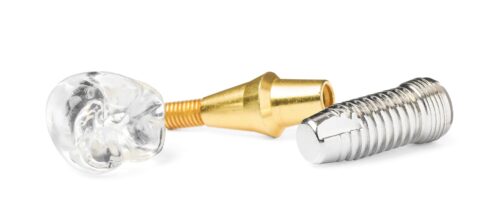
- Oral surgery and implantology, where teeth are unsalvageable and need to be replaced
- Orthodontics, when teeth need to be repositioned rather than covered
- Prosthodontics and oral rehabilitation, to design and execute the restored bite
- Cosmetic dentistry, so the result reads as a face rather than as dental work
In most practices, this means referrals — the patient carries the case between offices, each one solving its own piece, and the coordination is the patient’s problem. Sequencing errors in reconstruction are expensive, because a step performed out of order can require redoing the ones before it.
Makeover Dental Studio is organized around specialists working within their own disciplines in the same practice. For a single crown that is a nicety. For a full mouth reconstruction it is the difference between a coordinated plan and a series of independent opinions.
How the treatment is sequenced
1. Diagnosis, in depth. Three-dimensional imaging, photographic records, models of both arches, bite registration, joint assessment and analysis of how the teeth actually meet. This phase is longer than patients expect and it is where the case is won or lost.
2. Stabilization. Active disease is resolved first. Periodontal treatment, endodontics, extraction of teeth that cannot be saved. Nothing definitive is built on an unstable foundation.
3. Planning the target bite. The restored vertical dimension and tooth positions are designed digitally before anything irreversible happens.
4. The provisional phase. This is the step that separates a well-run reconstruction from a gamble. The planned bite is built in temporary materials and you live in it — eating, speaking, sleeping — for a period of weeks or months. If the new position is uncomfortable, if the joints object, if speech is affected, it is adjusted in a material that is easy to adjust. Nobody should discover a problem with a new bite after it has been made in ceramic.
5. Definitive restoration. Once the provisional bite has been validated, the final restorations are fabricated to reproduce it precisely. Crowns, veneers, implant restorations and bridges as the plan requires.
6. Protection and maintenance. A night guard is standard in almost every reconstruction case, particularly where grinding caused the original damage. The reconstruction did not remove the habit that destroyed the first set of teeth.
Timeline, and why it resists compression
Full mouth rehabilitation is typically measured in months, not weeks. The variables are how much stabilization is required, whether implants are involved and need to integrate, whether orthodontics is part of the plan, and how long the provisional phase needs to run.
For patients crossing from San Diego, this means several planned trips with defined objectives, and the complete schedule should exist in writing before the first procedure. What can be coordinated remotely is coordinated remotely; what requires the chair is grouped so that trips are productive.
A clinic that offers to complete a full mouth reconstruction in a single week is compressing the phase that protects you — the provisional phase — and that is the phase least worth removing.
Frequently asked
Is this the same as a smile makeover?
No, though they overlap in appearance. A smile makeover addresses how teeth look. A full mouth rehabilitation addresses how the bite functions, and improves appearance as a consequence. If your teeth look worn but function normally and are not deteriorating, you may need considerably less than a reconstruction. That is a finding we deliver regularly.
Will I be without teeth at any point?
No. Provisional restorations are in place throughout, and the provisional phase exists precisely so that you are testing the new bite while wearing functional teeth.
Does everything have to be crowned?
Not necessarily. A well-designed reconstruction is conservative where it can afford to be. Some teeth may need only orthodontic repositioning or minimal restoration. The plan should be able to justify each tooth it treats.
What if I have missing teeth as well?
That is common, and implants are frequently part of a reconstruction. It also changes the sequence, since implants require integration time. Our article on how many implants you need covers the range of options.
How long does the result last?
It depends heavily on maintenance and on whether the cause was addressed. A reconstruction in a patient who grinds and does not wear a night guard is on a shorter clock than one in a patient who does. Materials and design matter, but the habit matters more.
If several of the symptoms above describe you, the useful next step is a diagnosis rather than a quote. A consultation is where we determine whether this is a reconstruction case at all — and if it turns out to be less than you thought, that is what the plan will say. Our contact page is where to start.
Related reading: Full Mouth Reconstruction in Tijuana · Veneers vs crowns · Root canal or implant?