
Veneers vs Crowns: They Are Not Competing Options
Patients ask which one is better, and the honest reply is that the question has a hidden premise. Veneers and crowns are not two versions of the same treatment. They answer different questions.
A veneer answers: how does this tooth look.
A crown answers: will this tooth survive.
Most of the regret in this area comes from applying one to a problem that belonged to the other. A crown placed where a veneer would have done removes tooth structure that will never come back. A veneer placed on a tooth that needed a crown fails, sometimes taking the tooth with it.
Here is how to tell which conversation you are actually in.
What each one is
A veneer is a thin shell — most commonly porcelain — bonded to the front surface of a tooth. It changes shade, shape, length and apparent alignment. It covers the visible face of the tooth and leaves most of the tooth’s structure, particularly the back and the core, untouched.
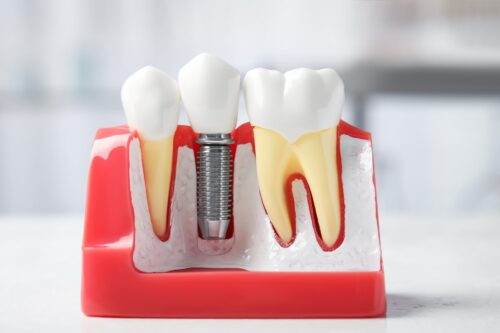
A crown covers the entire tooth. It is a full-coverage restoration that encases what remains and holds it together under chewing force. Where a veneer is a facing, a crown is a structural replacement for the outer portion of the tooth.
How much tooth is removed
This is the most consequential practical difference and the one most worth understanding before agreeing to either.
A veneer requires preparing a modest layer of enamel from the front surface, so the shell sits flush rather than bulking the tooth outward. The amount varies with the case, and conservative preparation techniques exist. What does not vary is that the enamel removed does not regenerate. A veneer is irreversible.
A crown requires reducing the tooth on all surfaces to make room for full coverage. That is substantially more tooth structure, and it is why a crown is a restorative decision rather than a cosmetic one. Once a tooth is crowned, it is crowned for the rest of its life; future work means replacing the crown.
Both are irreversible. One is considerably more so.
When a veneer is the right answer
Veneers are appropriate when the tooth is fundamentally sound and the problem is appearance.
- Discoloration that does not respond to whitening — internal darkening, tetracycline staining
- Teeth worn short or chipped along the edges, where the underlying structure is intact
- Small gaps and minor rotations, when orthodontics is not being pursued
- A comprehensive redesign where shape, shade and proportion change together across the front teeth
The precondition is a healthy tooth with adequate enamel to bond to. Bonding strength to enamel is significantly better than to dentin, which is one reason a heavily restored tooth is a poor veneer candidate.
When a crown is required
Crowns are appropriate when the tooth’s structural integrity is the issue.
- After root canal treatment, particularly on molars and premolars. A treated tooth has lost internal structure and is at real risk of fracture without full coverage.
- A tooth with a large existing filling, where the remaining walls are thin
- A fractured tooth, or one with a crack that is being managed
- Extensive decay leaving insufficient structure for a filling
- A tooth serving as an abutment for a bridge
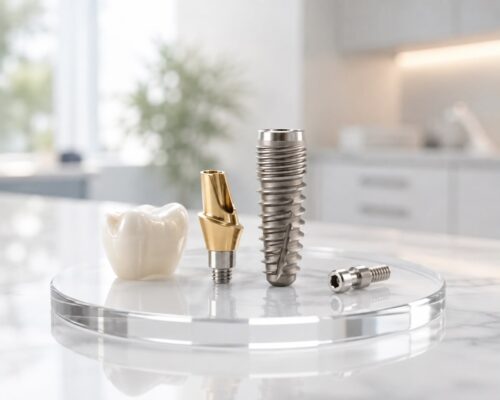
- The restoration on top of a dental implant
In each of these the question is not aesthetic. It is whether the tooth stays in one piece.
The two mistakes
Mistake one: a crown used cosmetically. A patient wants a better-looking front tooth and receives a crown. It looks fine. It also cost them the entire circumference of a healthy tooth that only needed a facing. This happens more often in high-volume cosmetic practice than anyone advertises, in part because crowns are more forgiving to prepare and fit.
Mistake two: a veneer placed on a tooth that needed a crown. A tooth with a large old filling, or one that has had a root canal, receives a veneer because the patient asked for veneers. The veneer bonds to a compromised substrate, the underlying tooth flexes, and either the veneer debonds or the tooth fractures.
The way to avoid both is to establish, before discussing materials, whether the tooth’s problem is cosmetic or structural. A specialist who begins there rather than with your preferred treatment is doing the job correctly.
The mixed case, which is most cases
Real smiles are rarely uniform. It is entirely normal for a treatment plan to include veneers on the teeth that are sound, crowns on the two that have been root-canal-treated, and nothing at all on teeth that only needed whitening.
This is where matching becomes a genuine skill. Porcelain shade and translucency behave differently depending on what is underneath, and a crown on a discolored root does not begin from the same baseline as a veneer on healthy enamel. Achieving a consistent appearance across mixed restorations is a design problem, and it is the reason the result should be planned digitally and previewed before anything is prepared.
Materials, briefly
Both are most commonly made from ceramic. Feldspathic porcelain and lithium disilicate are widely used for veneers and for crowns in the visible zone, chosen for their optical behavior. Zirconia is used where strength requirements are higher, typically further back in the mouth or in full-arch work, and modern layered zirconia has narrowed the aesthetic gap considerably.
Metal-ceramic crowns still exist and still have applications, though the visible dark margin at the gum line over time is the reason they have largely been replaced in the smile zone.
The relevant point for a patient: the material should follow the case, not the price list.
Longevity
Porcelain veneers commonly last in the range of ten to fifteen years and frequently longer with good maintenance. Ceramic crowns fall in a similar range. Both figures depend far more on the patient than on the restoration — grinding, hygiene and whether the bite was properly designed are the dominant variables.
Neither is permanent. Both are replaceable, and replacement is a normal part of their lifecycle rather than a failure.
What we recommend first
If whitening and bonding get you where you want to be, that is what we will recommend, and we will say so before veneers enter the conversation. If the underlying issue is tooth position rather than appearance, moving a tooth orthodontically is more conservative than covering it, and that will be the recommendation even though it takes longer.
A veneer case that should have been a whitening case is the most common regret in cosmetic dentistry. It is avoidable at the diagnosis stage and nowhere afterward.
Frequently asked
Can I get a veneer on a tooth that has had a root canal?
Generally not advisable. A root-canal-treated tooth has lost internal structure and typically requires full coverage to resist fracture. There are exceptions in the front of the mouth with minimal access preparation, but they are exceptions and should be justified case by case.
Will people be able to tell?
Only if it is designed to be obvious. Uniform brightness, uniform squareness and identical shapes across every tooth is a look, and it is a choice. Shade, translucency and shape matched to your face and your age is harder to execute and is the standard we work to.
Do veneers ruin your teeth?
They require permanent removal of enamel, which is a real cost and the reason they should be reserved for cases that genuinely call for them. They do not damage a tooth when properly indicated, prepared and bonded.
How many do I need?
That depends on how many teeth show when you smile and speak, which varies between people more than most expect. Treating too few produces a visible boundary between restored and natural teeth. This is decided during design, with photographs, not by a standard number.
Can I preview the result?
You should be able to. A digital design reviewed with you, and a trial version placed in your mouth so you see shape and length on your own face before anything is prepared. Nothing irreversible should happen before you have approved what it will look like.
If you are not certain whether your case is cosmetic or structural, that is exactly what a consultation determines, and it changes the entire plan. Our contact page is where that conversation begins.
Related reading: Porcelain Veneers in Tijuana · Cosmetic Dentistry in Tijuana · What is full mouth rehabilitation?