Best Implant Brands: What Actually Differs, and What Matters in Fifteen Years
Patients who research implants eventually arrive at brand names, and the internet answers the question badly in both directions. One camp insists the brand is everything. The other insists titanium is titanium and it makes no difference.
Both are wrong, and they are wrong about the same thing: they are arguing about the first year when the real difference shows up in the fifteenth.
This article is educational and deliberately neutral. It does not recommend a manufacturer. What it does is explain what actually separates implant systems, so that when a clinic tells you which one it uses, you know what you are being told.
What is genuinely different between systems
Surface treatment
The titanium surface of an implant is not smooth. It is treated — etched, blasted, chemically modified — to create microscopic texture that bone cells can attach to. Surface technology is where a large share of manufacturer research and marketing lives, and it primarily affects how quickly and how reliably bone integrates with the implant during healing.
Where this matters most is in compromised sites: less dense bone, grafted bone, patients whose healing is slower. In a healthy site with good bone, most well-documented modern surfaces integrate successfully.
Connection geometry
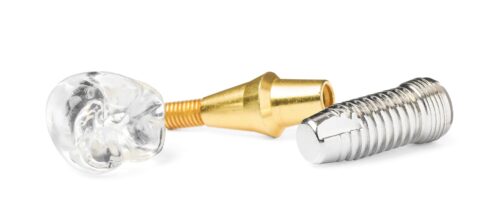
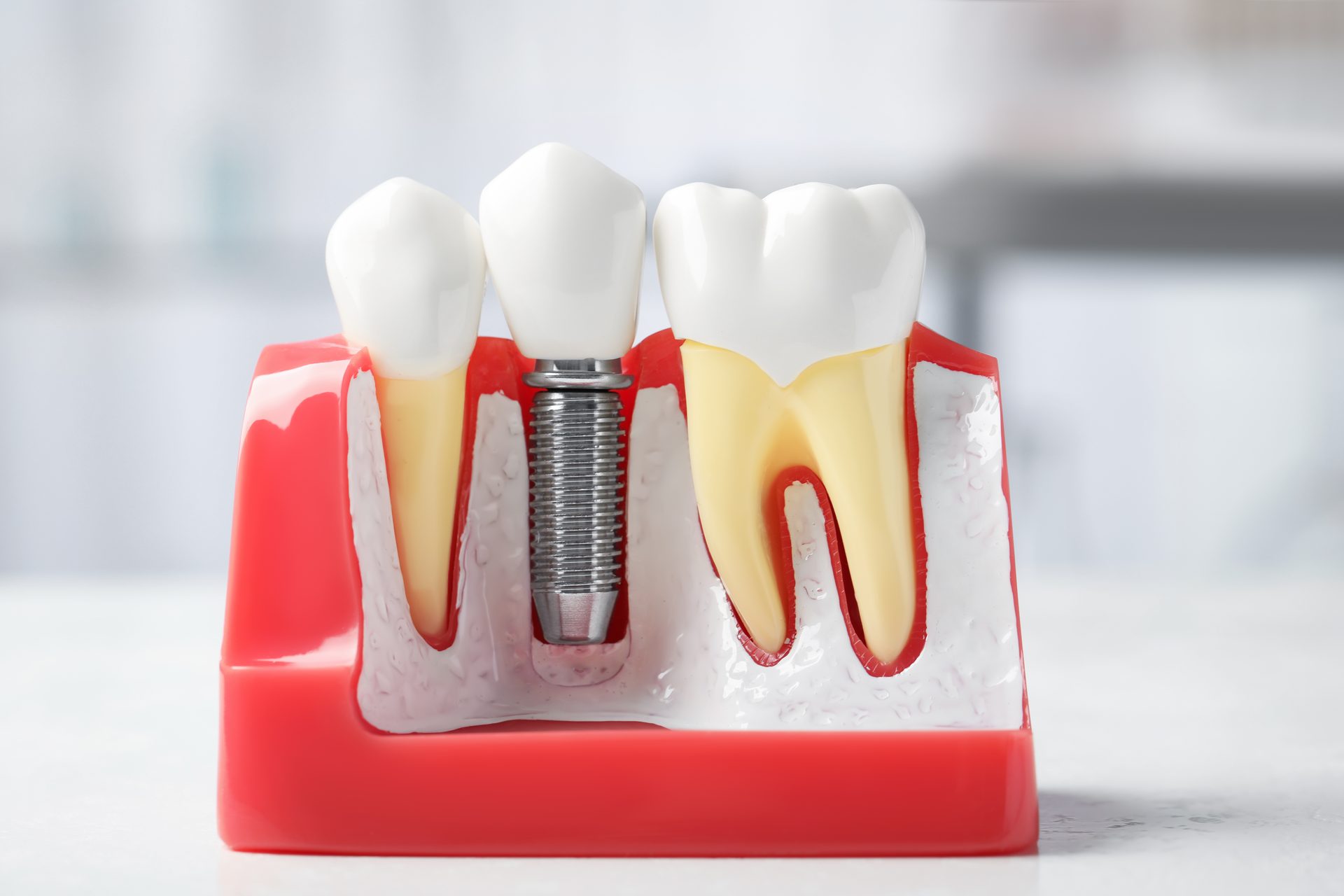
The junction between the implant and the abutment above it is engineered differently in every system. Internal or external, conical or flat, with varying degrees of engagement. This affects the mechanical stability of the connection under years of chewing load, how well it seals against bacterial infiltration, and how bone behaves at the crest around the implant.
It also has one consequence that matters enormously to you as a patient: components are not interchangeable between systems. An abutment from one manufacturer does not fit another manufacturer’s implant. This is the single most practical fact in this entire article.
Material
The overwhelming majority of implants are commercially pure titanium or titanium alloy. Some manufacturers use proprietary alloys engineered for higher strength, which permits narrower implants in tight spaces. Zirconia implants exist as a metal-free alternative and have a smaller but growing evidence base.
Documentation
This is the least glamorous differentiator and arguably the most important. Some systems have been studied in independent, long-term, peer-reviewed follow-up for decades across large patient populations. Others have a few years of manufacturer-sponsored data. When a system is described as “well documented,” that is what is meant, and it is a meaningful distinction — not marketing.
How the industry is actually tiered
Without naming manufacturers, the market divides roughly into three groups.
Premium, extensively documented systems. Long research histories, global distribution, large independent literature bases, and — critically — long-term commitment to manufacturing replacement components. These cost more, per implant, than the alternatives.
Established mid-market systems. Reputable manufacturers with solid clinical records and lower price points, often with somewhat shorter documentation histories or narrower component ecosystems.
Value and generic systems. A wide and uneven category. Some are competent products from smaller manufacturers. Some are copies of premium designs with no independent research behind them and no assurance the company will exist in a decade.
The price difference between tiers, per implant, is real but is rarely the largest line in a treatment plan. It is a smaller number than most patients assume, which makes the trade-off worth understanding rather than optimizing away.
The argument that actually matters: parts in fifteen years
Here is the scenario that decides this question.
It is twelve years from now. The implant in your jaw is fine — integrated, stable, no bone loss. But the abutment screw has loosened, or the crown has fractured, or you have moved and a new dentist is servicing the work.
That dentist needs a component that fits your specific implant, from your specific manufacturer, in your specific dimensions. If the manufacturer still exists and still supports the line, this is a routine appointment. If the manufacturer has been acquired, discontinued the line, or never existed outside a single distribution channel, the options narrow quickly. In the worst case the fix is removing an implant that had nothing wrong with it.
This is the real argument for a well-established system, and it is almost never how the choice is presented. It is not about how the implant performs. It is about whether the ecosystem around it will still be there when you need it.
For a patient who is treated in Tijuana and lives in San Diego, this consideration carries extra weight, because the dentist servicing your restoration in twelve years may not be the one who placed it.
Why the brand is not the first question
An implant placed at the wrong angle, in insufficient bone, or restored with a crown that cannot be cleaned around, is a compromised case regardless of what is stamped on the fixture. Conversely, a well-documented mid-market implant placed by a specialist with proper planning and a well-designed restoration is a good outcome.
The variables that dominate, roughly in order:
- Whether the site was properly diagnosed with three-dimensional imaging
- Whether the implant was positioned correctly for the restoration that will sit on it
- Whether the person placing it does this daily
- Whether the restoration is designed so you can actually clean around it
- Whether you maintain it
- Which system was used
Brand is on the list. It is not at the top of it. Our article on how long implants last covers what typically ends an implant, and the brand rarely appears in that story.
What to ask, and what to keep
Regardless of where you are treated:
- Which system, and which specific line within it? Manufacturers make several.
- How long has that line been in production, and is it broadly distributed in the United States?
- Will I receive documentation of what was placed? The standard is an implant record — sometimes called an implant passport — showing manufacturer, model, dimensions and lot number, usually with adhesive labels from the sterile packaging.
- Can a dentist in the U.S. obtain components for it?
Keep that documentation the way you would keep a vehicle title. It is the thing that makes your implant serviceable anywhere.
Frequently asked
Is a more expensive implant always better?
No. It is generally better documented and more likely to have long-term component support, which are real advantages. It is not automatically a better clinical outcome in a healthy site with good planning.
Can I request a specific brand?
You can ask, and a clinic will tell you what it works with. Specialists develop deep familiarity with the systems they use daily, and a surgeon placing an unfamiliar system on request is not obviously a better outcome than one placing a familiar one.
My implant was placed years ago and I do not know the brand. What now?
An X-ray can often identify a system by its distinctive geometry, and experienced clinicians and identification databases exist for exactly this. It is worth resolving before you need a component urgently.
Are cheaper implants dangerous?
Not inherently. The concerns are the quality of the evidence behind them and the availability of components years later. Those are legitimate concerns to raise directly, and a clinic should be able to answer both.
Does the brand affect how long the implant lasts?
Less than the placement, the restoration design and the maintenance. Where system choice most clearly matters is in difficult sites and in long-term serviceability.
If you want to know exactly what would be placed in your case and why, that is a question with a specific answer rather than a general one. Our contact page is where to ask it.
Related reading: Dental Implants in Tijuana · Nobel Biocare vs Straumann · How long do dental implants last?