
How Long Do Dental Implants Last? The Honest Version
The question sounds simple and the answer is usually evasive, which makes patients suspicious. That suspicion is reasonable. But the evasion is not always sales — it is often the fact that “dental implant” describes two separate objects with two very different lifespans, and answering with a single number requires ignoring one of them.
Here is the version that is actually useful.
The two parts, and why they are different
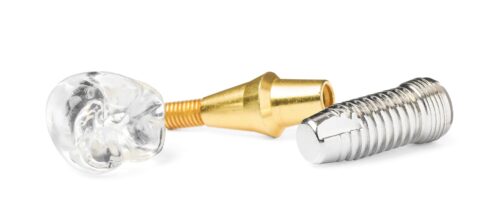
The fixture is the titanium post placed into your jawbone. Once it has integrated — meaning bone has grown into direct contact with its surface — it is not a temporary structure. Titanium implants have been documented in long-term follow-up over decades, and a fixture that integrates successfully and is maintained properly is designed to stay where it is.
The restoration is what sits on top: the crown, the bridge, the abutment that connects them. This is a dental restoration, and like every other dental restoration it is a wear item. Porcelain chips. Screws loosen. Materials fatigue. Bites change. A restoration may need repair or replacement over the course of decades while the implant beneath it stays exactly where it was placed.
So the honest answer has two halves: the implant is intended to be permanent, and the tooth on top of it is not.
Anyone who quotes you a single number for both is simplifying, and usually rounding in the direction that sells.
What actually ends an implant
Implants do not typically fail from age. They fail from specific, identifiable causes, most of which are known before placement.
Peri-implantitis
This is the one that matters most and gets discussed least. Peri-implantitis is an inflammatory condition of the tissue and bone around an implant, driven by bacterial biofilm. It is the implant equivalent of periodontal disease, and it behaves similarly: it is often painless in its early stages, it progresses by destroying the bone that holds the implant, and by the time it is obvious it has already cost you support.
The critical difference is that an implant has no periodontal ligament. A natural tooth is suspended in a ligament that carries blood supply and immune response to the site. An implant is fused directly to bone. When infection reaches an implant, the biological defenses available to it are weaker than what a natural tooth has.
This is why implant maintenance is not optional and not the same as ordinary cleaning.
Smoking
Smoking is consistently associated with higher implant failure rates in the clinical literature. It affects healing during integration and it affects the tissue around the implant afterward. This is not a moral point, it is a planning point: it changes the risk profile of the case, and a clinic that does not raise it is not planning carefully.
Uncontrolled systemic conditions
Poorly controlled diabetes, in particular, affects healing and infection response. Controlled diabetes is generally a different conversation. Certain medications, including some used for bone density, are also relevant and should be disclosed before surgery.
Bite forces and bruxism
An implant does not feel pressure the way a natural tooth does, because it has no ligament with pressure receptors. A patient who grinds can apply forces to an implant restoration that they would never apply to a natural tooth, because the feedback that would normally stop them is not there. Over years this shows up as fractured porcelain, loosened screws, or bone loss around the implant. A night guard is frequently part of the plan and is worth taking seriously.
Poor initial positioning or prosthetic design
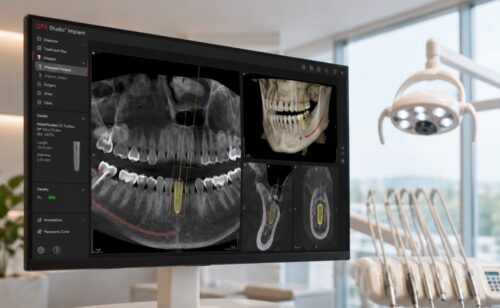
An implant placed at the wrong angle, in insufficient bone, or restored with a crown that is difficult to clean around is a case that was compromised before the patient ever went home. This is the largest single argument for who places it mattering more than which brand is used.
What you actually control
Daily cleaning around the implant, including underneath a bridge. Full-arch bridges require specific tools — floss threaders, interdental brushes, water irrigation. If nobody showed you how to clean under yours, that is a gap in your care, not in your diligence.
Professional maintenance on a schedule. Implants are cleaned with different instruments than natural teeth, and the tissue around them is monitored for early signs of bone loss. Skipping this because “the implant cannot get a cavity” is the single most common maintenance error.
Managing grinding. If you grind, protect the work.
Not smoking, particularly during the integration period.
Frequently asked
Can an implant get a cavity?
No. Titanium and porcelain do not decay. This is the reason implants are often described as low maintenance, and the reason peri-implantitis catches people off guard — the risk moved from the tooth to the tissue and bone around it, and that risk is real.
What happens if an implant fails?
It depends on why and when. An implant that does not integrate in the first months is usually removed, the site is allowed to heal, and placement is attempted again later, sometimes with grafting. Late failure from bone loss is more complex and the plan depends on how much bone remains. Failure is not common, but it is not zero, and any clinic that tells you it is zero is telling you something about its honesty rather than its results.
How often should implants be checked?
The interval is set by your risk profile — history of periodontal disease, smoking, grinding and the type of restoration all move it. What is consistent is that it is a scheduled interval, not a symptom-driven visit. Bone loss around an implant is typically painless until it is advanced.
Do full-arch bridges last as long as single crowns?
The implants underneath follow the same principles. The bridge itself is a larger, more complex restoration under greater cumulative force, and materials differ. Acrylic-based provisional and hybrid designs wear differently than zirconia. The maintenance conversation matters more here, not less.
Is a night guard really necessary?
If you grind, yes, and it is inexpensive relative to what it protects. Many patients do not know they grind. Wear facets on your existing teeth answer the question during a consultation.
If you already have implants and want a straight assessment of how they are holding up, or you are planning them and want to understand the maintenance before you commit, that is a conversation worth having in person. Our contact page is where it starts.
Related reading: Dental Implants in Tijuana · How to think about implant brands · Root canal or implant?